

RFID Tags for Cattle Identification
J-7868 UHF Ear Tags for Farm Identification and Records
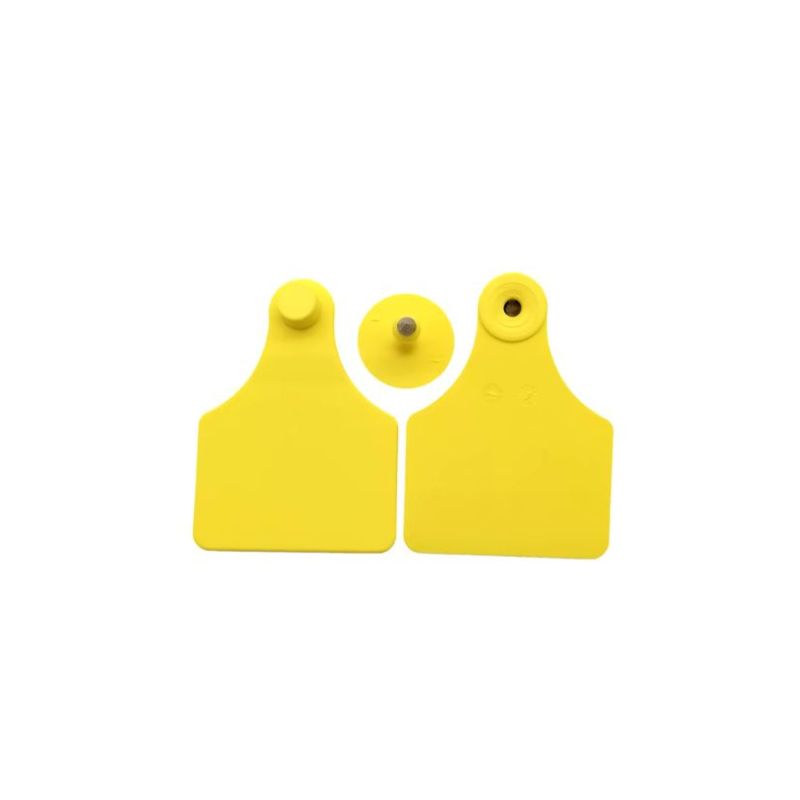
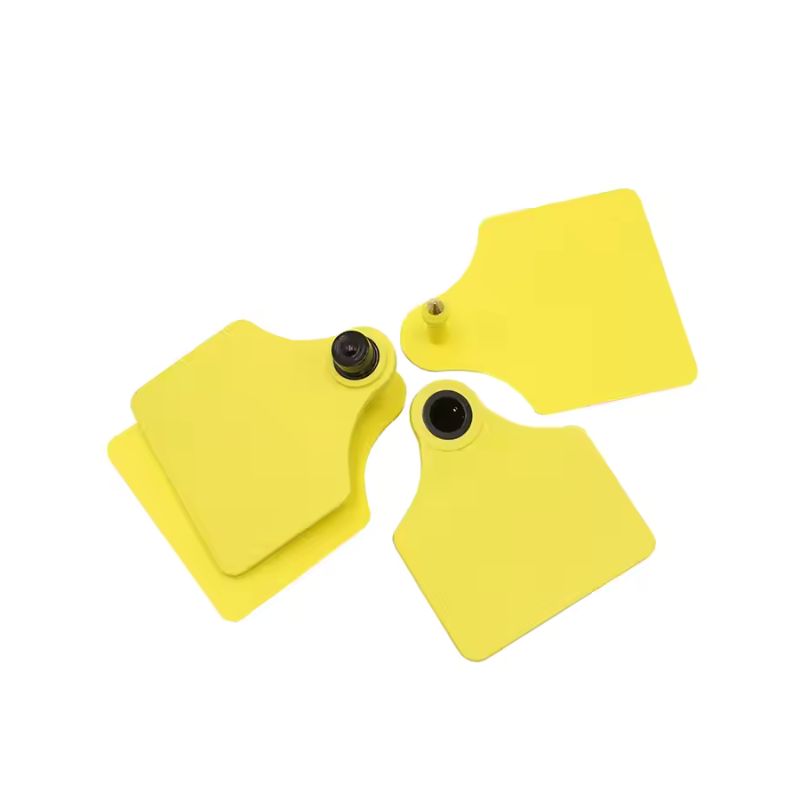
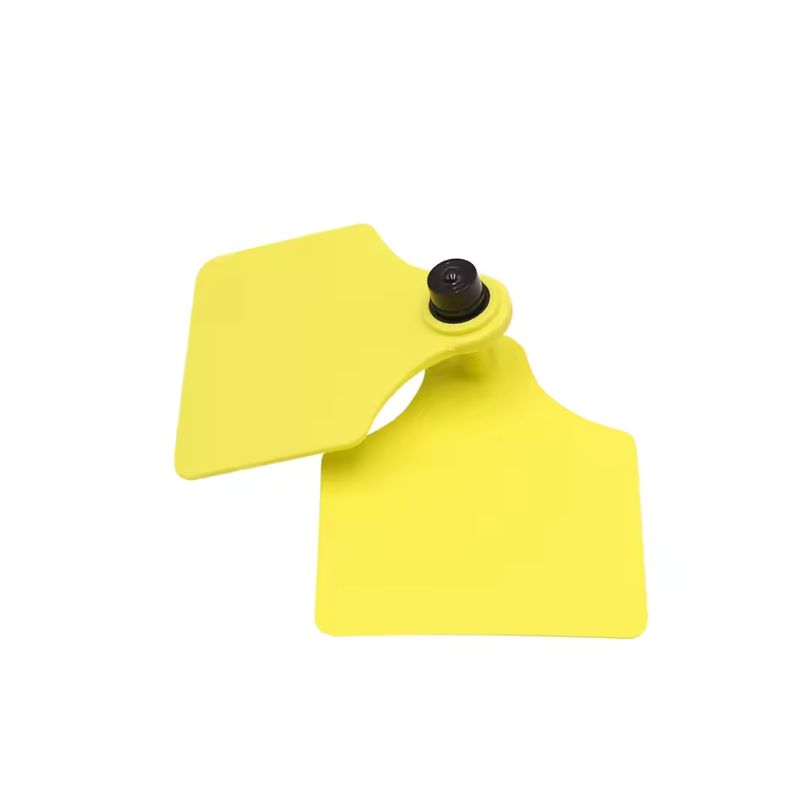
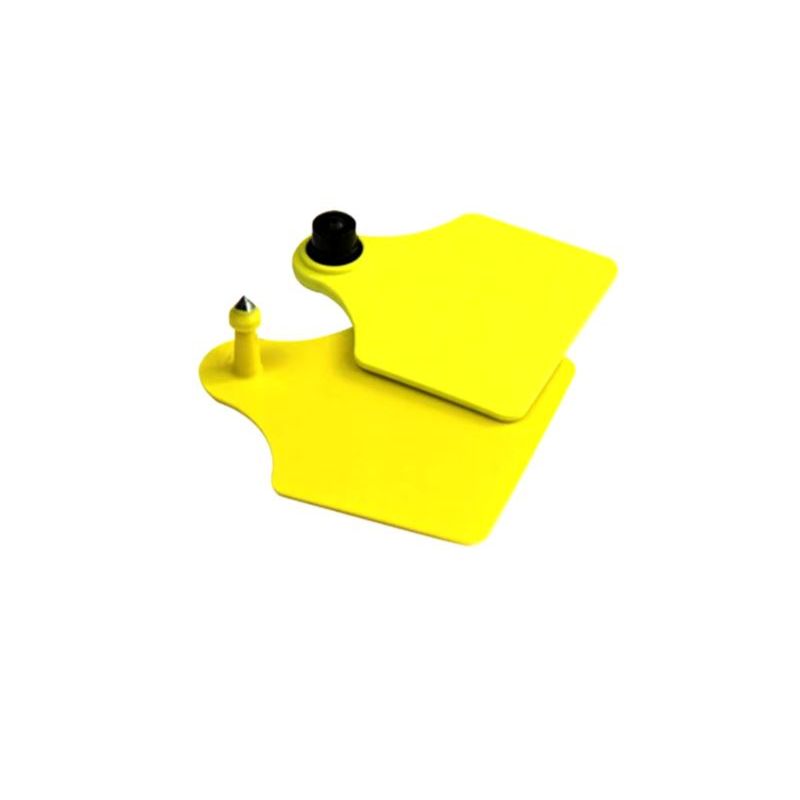
The J-7868 RFID tags for cattle are passive UHF ear tags made from TPU, supplied as matching male and female attachment sets. Each tag uses an NXP UCODE 8 chip, operates at 902–928 MHz and supports ISO 18000-6C / EPC Gen2 readers.
The specified reading distance is 0–8 meters. Actual performance depends on reader power, antenna placement, tag orientation and the farm environment. The minimum order quantity is 500 sets.
Each tag provides an electronic identifier that can be linked to animal records in a connected farm management system. Compatible readers and software support herd inventory, weighing, feeding and breeding-related recordkeeping.
Technical Specifications
| Parameter | Specification |
| Model | J-7868 |
| Tag type | Passive UHF RFID cattle ear tag |
| Chip | NXP UCODE 8 |
| Frequency | 902–928 MHz |
| Protocol | ISO 18000-6C / EPC Gen2 |
| Material | TPU — thermoplastic polyurethane |
| Color | Yellow |
| Female tag dimensions | 78 × 68 × 13 mm |
| Male tag dimensions | 29 × 23 mm |
| Female tag weight | 15.5 g |
| Male tag weight | 1.9 g |
| Reading distance | 0–8 m, depending on reader setup and environment |
| Working temperature | −20°C to +65°C |
| Tensile strength | >290 N |
| Identification marking | Laser-etched numbers |
| Attachment | Matching male and female ear tag components |
| MOQ | 500 sets |
TPU Construction and Visual Identification
The TPU housing provides a flexible structure for livestock use. Matching male and female components form the attachment set, while laser-etched numbers give staff a visual reference when working with the animals.
The specified tensile strength is greater than 290 N. Correct installation, a compatible applicator and suitable placement remain important for tag retention and animal welfare.
Where RFID Tags for Cattle Are Used
- Herd Inventory and Identification
Handheld readers can capture tag IDs during stock checks. Fixed readers can be installed at controlled passages to record animals entering or leaving a designated area.
Reading coverage should be tested with cattle moving through the actual installation. - Weighing and Feeding Stations
A compatible reader can capture the animal ID at a weighing station or feeding point. The connected system can associate that ID with weight or feeding records, depending on the scale, controller and software integration. - Breeding and Daily Farm Records
Farm software can link the tag ID to breeding events, veterinary treatments, vaccinations and handling records.
The ear tag supplies identification. Staff and connected equipment supply the event data.
Reader Compatibility and Installation
Use a UHF reader that supports EPC Gen2 / ISO 18000-6C and is configured for the tag’s 902–928 MHz band. Confirm the permitted operating frequencies in the deployment country before selecting the reader and tag configuration.
This version requires compatible UHF equipment; it cannot be read by an LF-only 134.2 kHz livestock reader.
For a fixed reading point, test antenna position, passage width, reader power and cattle movement. Wet surfaces, body shielding and tag orientation can affect performance.
Install the matching male and female components using a compatible ear tag applicator. Follow the supplied fitting instructions and appropriate livestock-handling practices.
Are These RFID Tags for Cattle Compatible with Your System?
Share your reader model, deployment country, required read distance, installation layout, number-marking requirements and order quantity.
Our technical specialist can help check whether the J-7868 fits your project.
Email our team for samples and a quotation.
Frequently Asked Question
The top questions about RFID tags for cattle
No. The J-7868 is a 902–928 MHz UHF tag. An LF-only FDX-B or HDX livestock reader cannot read this version. Use a compatible UHF reader supporting EPC Gen2 / ISO 18000-6C.
No. The specified range is 0–8 meters. Actual results depend on the reader, antenna, power, animal position and surrounding conditions.
Test samples at the planned reading point before selecting the installation layout.
Standard UCODE 8 has no user memory. Keep detailed animal records in the farm database and associate them with the tag ID.
The chip provides up to 128-bit EPC memory and a factory-locked 96-bit TID identifier.
No. This is a passive identification tag without GPS or health sensors.
Recording an animal’s presence at a reading point requires a reader and connected system. Health measurements require separate equipment.
One set consists of matching male and female ear tag components used together for attachment.
The MOQ is 500 sets.
Contact our team to request samples for reader compatibility, installation and read-zone testing, and to confirm availability and delivery details.
Related Products
Customize any type of RFID tags from our factory to meet your own requirements.