Application-Specific RFID Label Solutions: Addressing Every Tagging Challenge
Summary
RFID labels are crucial in modern industries, enhancing process efficiency, safety, and accuracy.
However, the wide variety of applications presents unique challenges that can hinder the effectiveness of standard RFID solutions. At SAG, we see these challenges as opportunities for technological innovation, offering specialized RFID label solutions that address specific application needs.
Overcoming Space Constraints with 10x10 Smart Label
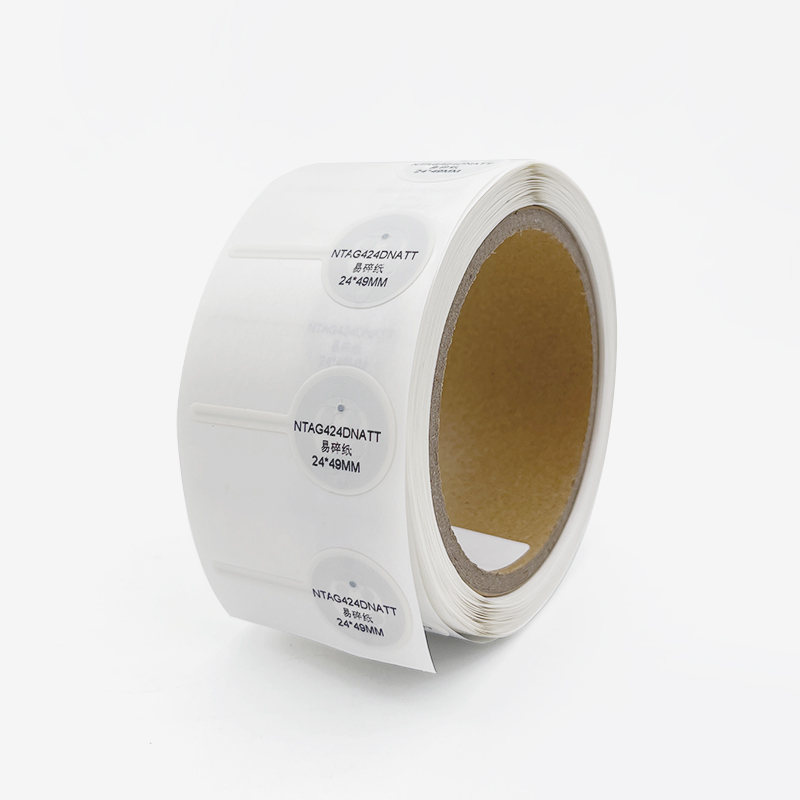
In applications where tagging space is limited, traditional RFID labels may not be practical. The 10×10 Smart Label is designed to overcome this challenge. Compliant with ISO15693 standards, this ultra-compact label is ideal for tagging small items, ensuring that even the most space-restricted assets can be accurately tracked.
Enhancing Durability with Glob-top Label for Physical Impact
For environments where RFID labels are exposed to physical impacts, durability is a key concern. The Glob-top Label is engineered with extra protection and enhanced thickness to withstand harsh conditions. This strengthened RFID label ensures reliability in demanding applications, where standard labels might fail due to physical stress.
Addressing Liquid Interference in RFID Detection
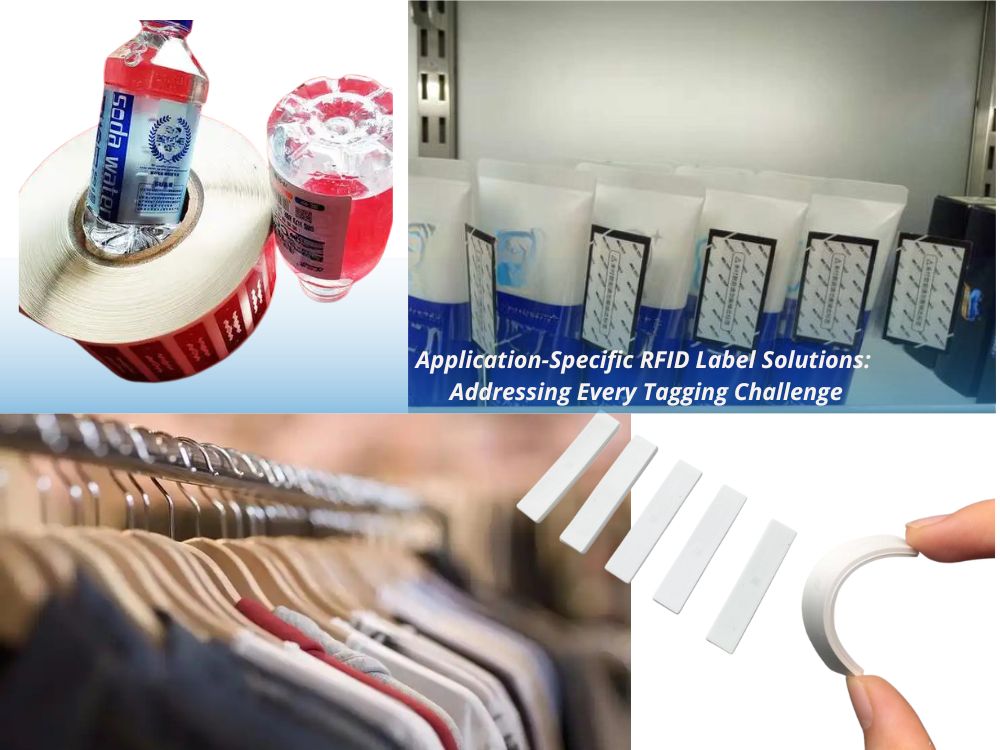
Liquids present a significant challenge for RFID detection, often causing interference that affects successful reading. SAG specializes in co-developing tailored RFID label solutions that mitigate these effects. Our expertise ensures reliable RFID performance in applications involving containers filled with liquids, providing consistent and accurate tracking.
Mastering Curved Surfaces with Specialized Labels
Conventional RFID labels often struggle to adhere to curved surfaces, especially in pharmaceutical applications where tubes and bottles are common. SAG’s engineered labels are designed to conquer these challenges, offering firm adhesion on even the most contoured containers. This innovation ensures reliable labeling in applications that demand precise placement on curved surfaces.
Dual-Frequency Innovation: The EM4425 Dual Frequency Label
The EM4425 Dual Frequency Label represents a groundbreaking advancement in RFID technology. This innovative label operates on both NFC and UHF frequencies simultaneously, offering versatile functionality. The label also includes a tamper-proof feature, where the status changes if the antenna loop is broken, providing an added layer of security.
Smart Cold-Chain Management with NFC Temp Tracker
Cold-chain management requires precise temperature monitoring to ensure product integrity. our Label-type NFC Temp Tracker combines NFC technology with temperature sensing, creating a comprehensive tool for tracking and recording temperature changes. This smart label solution ensures that temperature-sensitive products are monitored accurately throughout the supply chain.
Summary of Key Features and Benefits
Challenge | RFID Solution | Key Features |
Confined Space for Tagging | 10×10 Smart Label | Ultra-small form factor, ISO15693-compliant |
Physical Impact Resistance | Glob-top Label | Enhanced thickness, extra protection |
Liquid Interference | Customized RFID Label | Co-developed solutions for reliable liquid tracking |
Curved Surface Labeling | Specialized RFID Labels | Secure adhesion on contoured containers |
Dual-Frequency Operation | EM4425 Dual Frequency Label | Operates on NFC and UHF, tamper-proof feature |
Cold-Chain Management | Label-type NFC Temp Tracker | NFC-enabled, temperature monitoring |
Conclusion
Our application-specific RFID label solutions are designed to overcome the unique challenges posed by various industries. From confined spaces and physical impact to liquid interference and curved surfaces, our RFID labels provide robust, reliable performance. By leveraging innovative technologies like dual-frequency operation and smart cold-chain management, we continues to push the boundaries of RFID capabilities, ensuring that your tagging needs are met with precision and efficiency.
Comments