
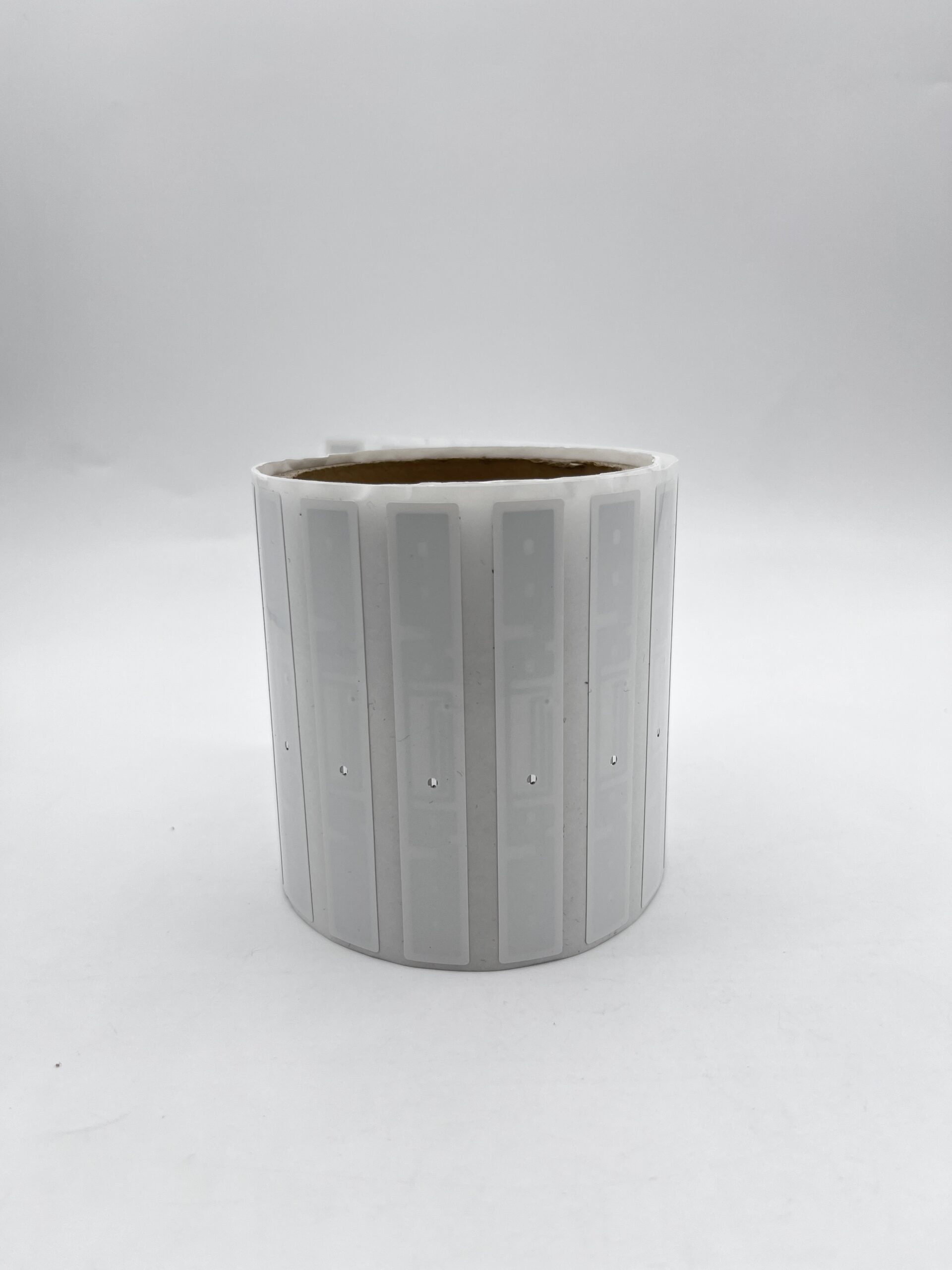
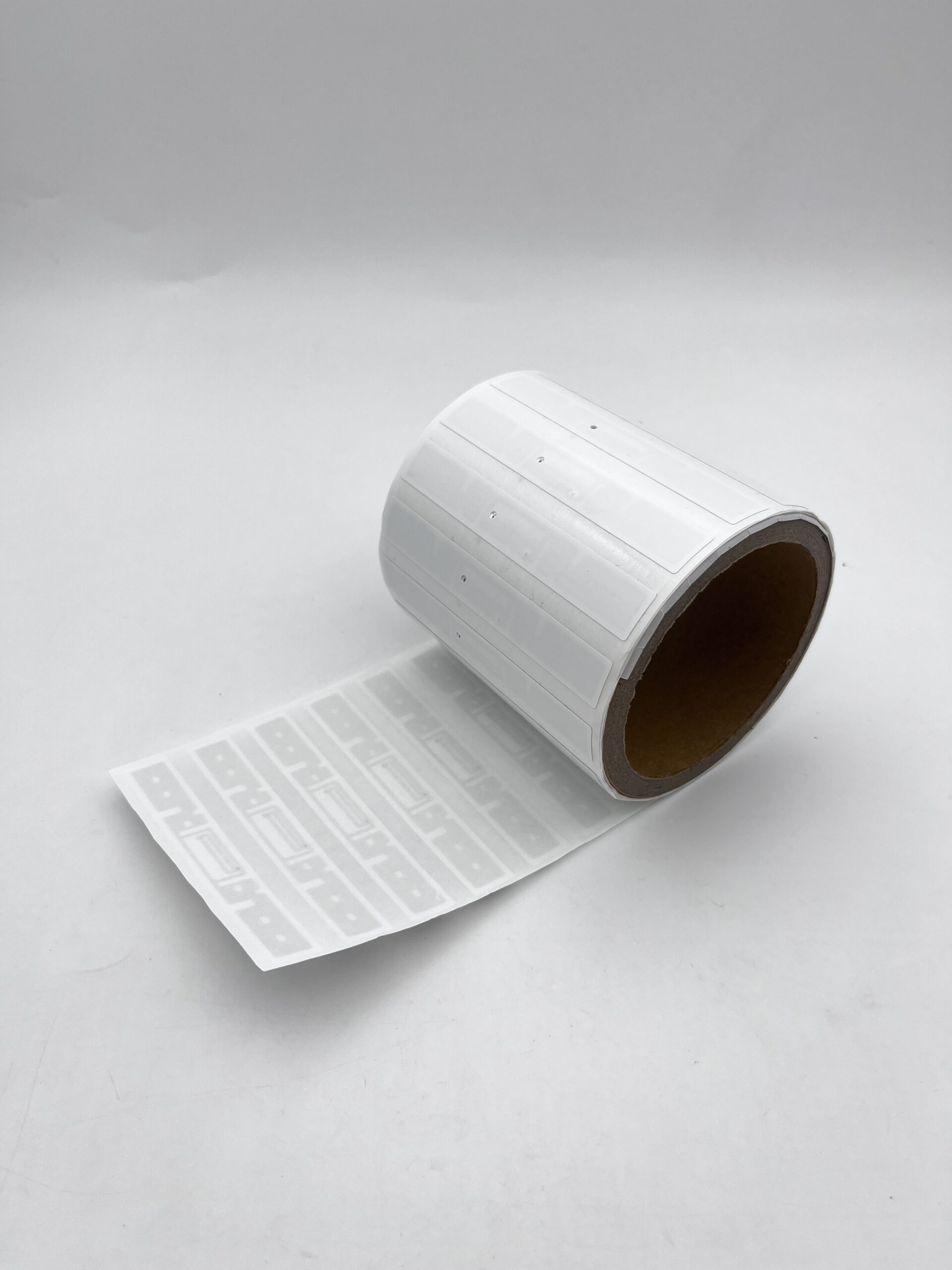
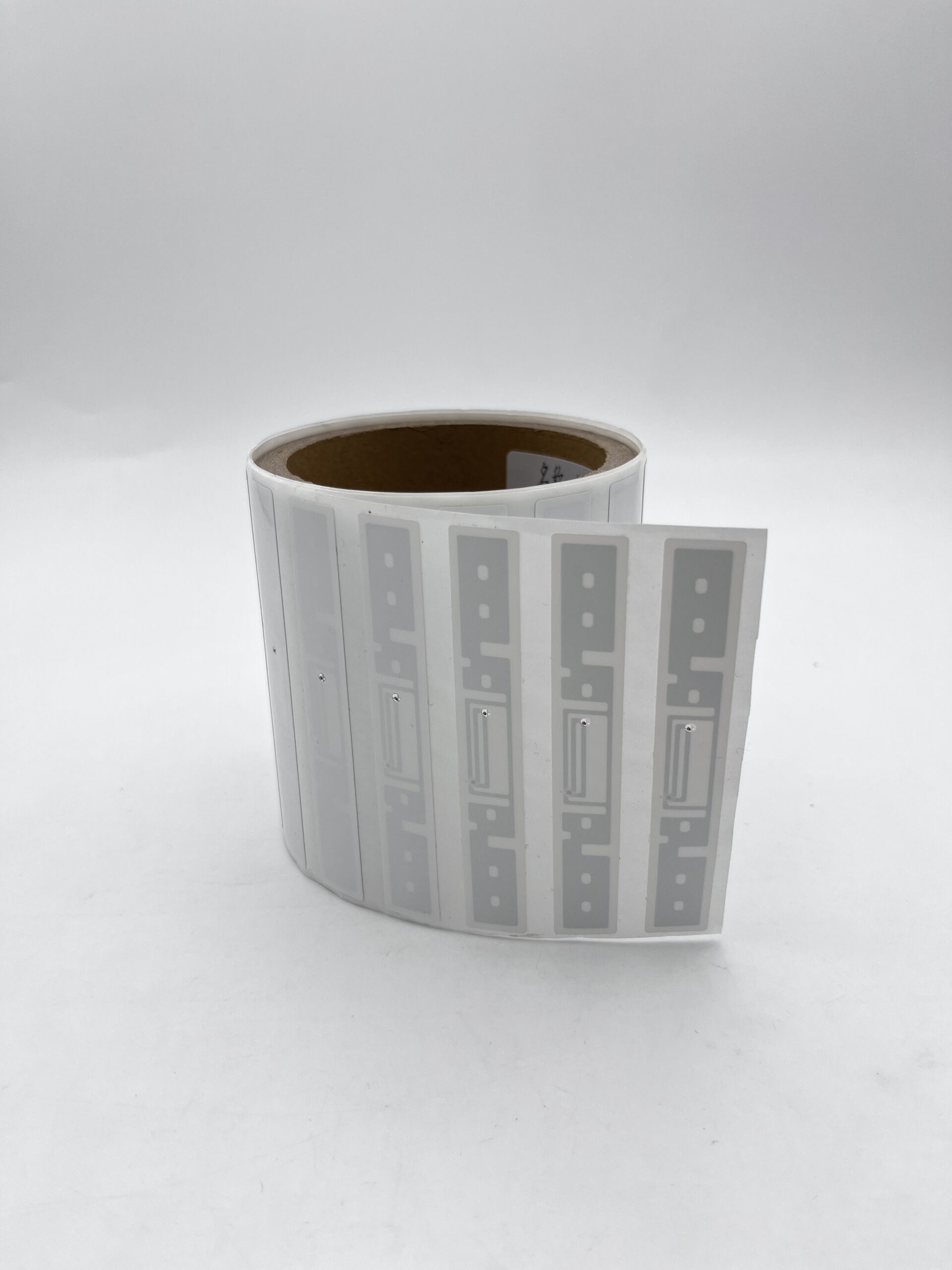

RFID Book Tag with LED for Library Shelf Location
UHF Library Book RFID Tag for Item Identification
An RFID book tag is an adhesive UHF label used to identify books, documents, archive files, and other library materials.
This model includes an integrated LED indicator. When compatible library software and a UHF reader select the tag, the LED illuminates to provide a visible shelf-location signal.
The library book RFID tag supports inventory, retrieval, and document-control workflows in libraries using EPC Gen2 UHF RFID infrastructure.
Technical Specifications
| Feature | Specification |
|---|---|
| Product Type | LED RFID book tag |
| Primary Use | Identification and visual location of books, documents, and archive materials |
| Frequency | UHF 860–960 MHz |
| Protocol | EPC Class 1 Gen 2 / ISO 18000-6C |
| Operating Mode | Read/write |
| LED Function | Illuminates after receiving a supported command from a compatible UHF reader |
| Material Options | PET or paper |
| Standard Size | Approx. 100 × 10 mm |
| Antenna | Etched aluminum antenna, approximately 9 μm |
| Mounting Method | Adhesive-backed label |
| Printing Options | Text, barcode, QR code, serial number, or library asset number |
| Encoding Options | EPC encoding, sequential numbering, and catalog-record matching |
| Customization Options | Material, size, printing, encoding, numbering, and packaging |
Reader compatibility and LED activation should be tested with the actual software, antenna layout, shelf arrangement, and label position before bulk deployment.
Typical Applications
- Library Shelf Retrieval
Staff can use the LED signal to distinguish a selected book from nearby titles or multiple copies stored on the same shelf. - Collection Inventory
Compatible UHF readers can identify tagged books during shelf checks without requiring each barcode to be visible. - Archive and Document Control
The label can be applied to files, folders, archive boxes, and controlled documents that require electronic identification. - Reserved or Missing Item Location
Libraries can use the visual indicator to find books prepared for collection, transfer, repair, reshelving, or investigation.
Library Shelf Retrieval Workflow with LED RFID Tags
Each RFID book tag is encoded and linked to the corresponding catalog or asset record.
When staff select a target item in compatible software, the system sends its identifier to a UHF reader. The matching tag receives the supported command and its LED illuminates.
The light provides a visual cue, while the RFID identifier confirms the selected item electronically.
Before deployment, libraries should test reader firmware, antenna placement, shelf density, book materials, label position, and LED visibility.
LED RFID Book Tag vs Standard UHF Library Label
| Comparison Point | Standard UHF Library Label | LED RFID Book Tag |
|---|---|---|
| Electronic identification | Yes | Yes |
| Multi-tag inventory | Supported with a compatible system | Supported with a compatible system |
| Visual location signal | No | Integrated LED |
| Item retrieval | Software or reader displays the result | Software result plus visible shelf indication |
| Reader requirement | Compatible EPC Gen2 UHF reader | Compatible UHF reader with LED-control support |
| Label structure | RFID chip, antenna, and label layers | RFID components plus LED indicator |
| Best suited to | General circulation and collection inventory | Selected-item retrieval and shelf location |
| Relative cost | Usually lower | Usually higher because of the LED component |
Choose a standard UHF label for general circulation and inventory. Choose an LED RFID book tag when staff also need a visible signal to locate a specific item.
Need LED RFID Book Tags for Your Library?
Contact JIA RFID to discuss your library software, UHF reader model, shelf layout, label size, printing, and encoding requirements.
Free samples are available for compatible projects, allowing your team to test LED activation, shelf-reading performance, label placement, and system integration before bulk production.
Frequently Asked Question
The top questions about RFID book tag
What is an RFID book tag?
An RFID book tag is an electronic label attached to a book so that a compatible reader can identify the item without requiring a visible barcode scan.
Is this an NFC library tag?
No. This product operates at UHF 860–960 MHz and supports EPC Gen2 / ISO 18000-6C. It is intended for compatible UHF RFID systems.
Can every UHF reader activate the LED?
No. The reader, firmware, antenna, and application software must support the tag’s LED activation method.
Can the tag work with an existing library system?
Compatibility depends on the library software, reader hardware, EPC format, and integration workflow. Sample testing is recommended before deployment.
Where should the tag be attached?
The label should be placed on a clean, flat area approved by the library, such as inside a book cover. The final position should support both reliable reading and visible LED output.
Can the label be printed and encoded?
Yes. Printing can include a barcode, QR code, serial number, or asset ID. RFID data can be encoded and matched to library catalog records.
Can multiple RFID book tags be read during inventory?
Yes. UHF RFID supports multi-tag identification when the reader, antennas, and software are configured for shelf inventory.
What is the MOQ?
The minimum order quantity is 1000 pcs.
What information is needed before ordering?
Provide the reader model, library software, label position, required size, printing data, encoding format, and order quantity.
Related Products
Customize any types RFID tags from our factory to meet your own requirements.