
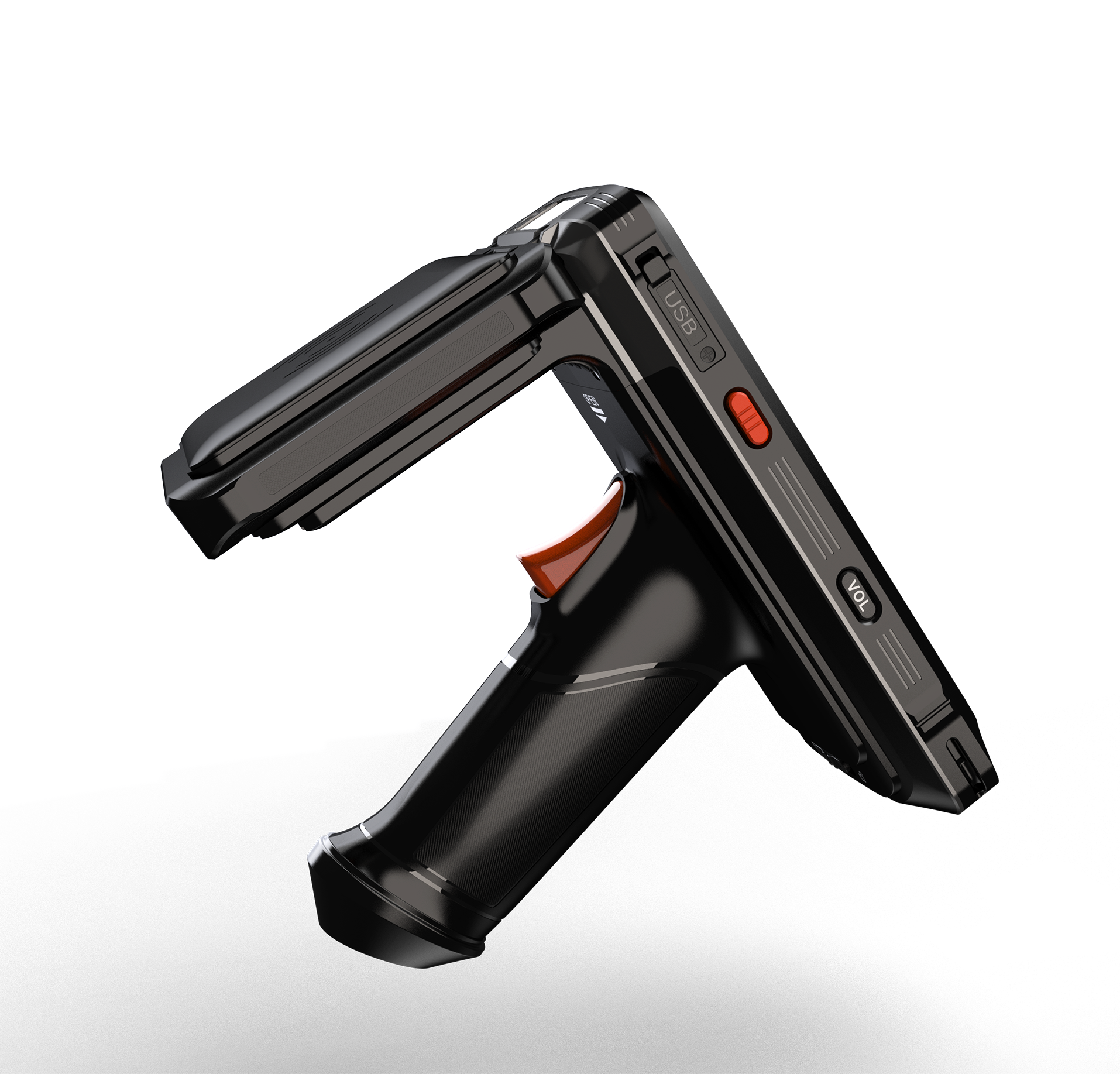
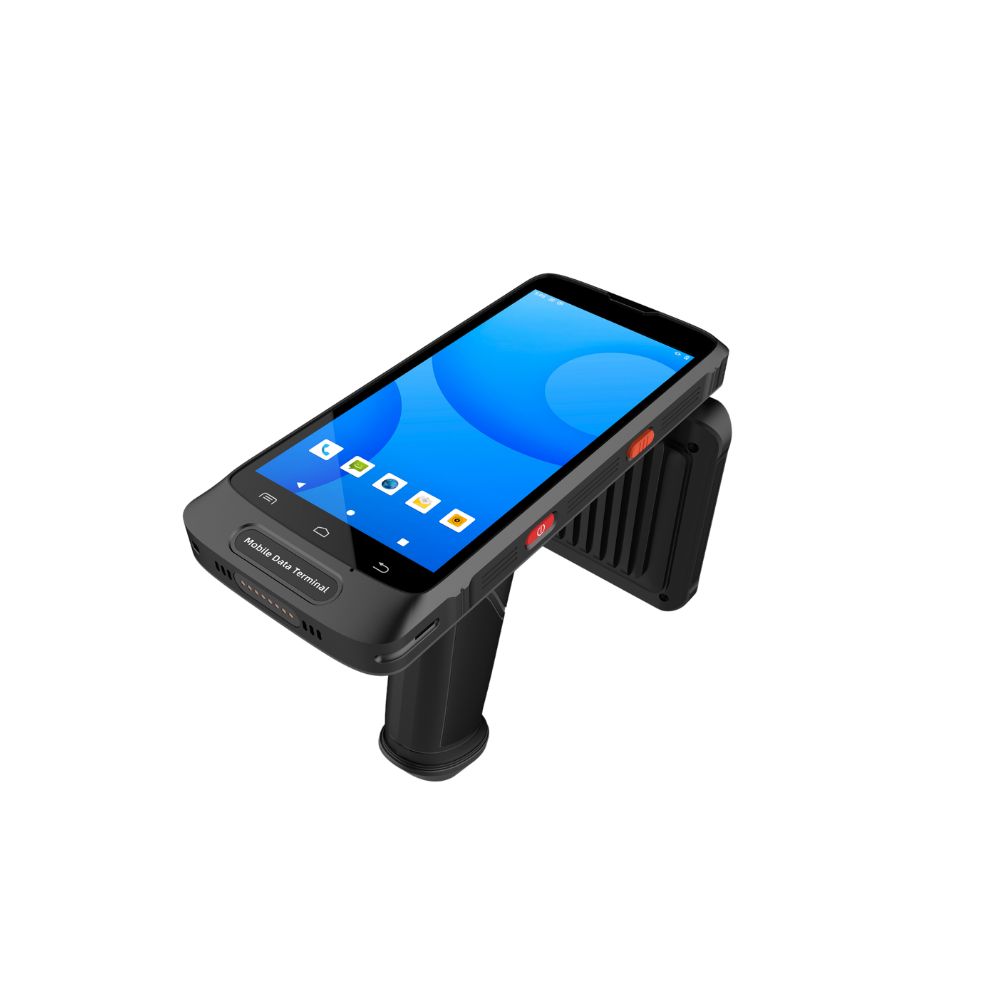
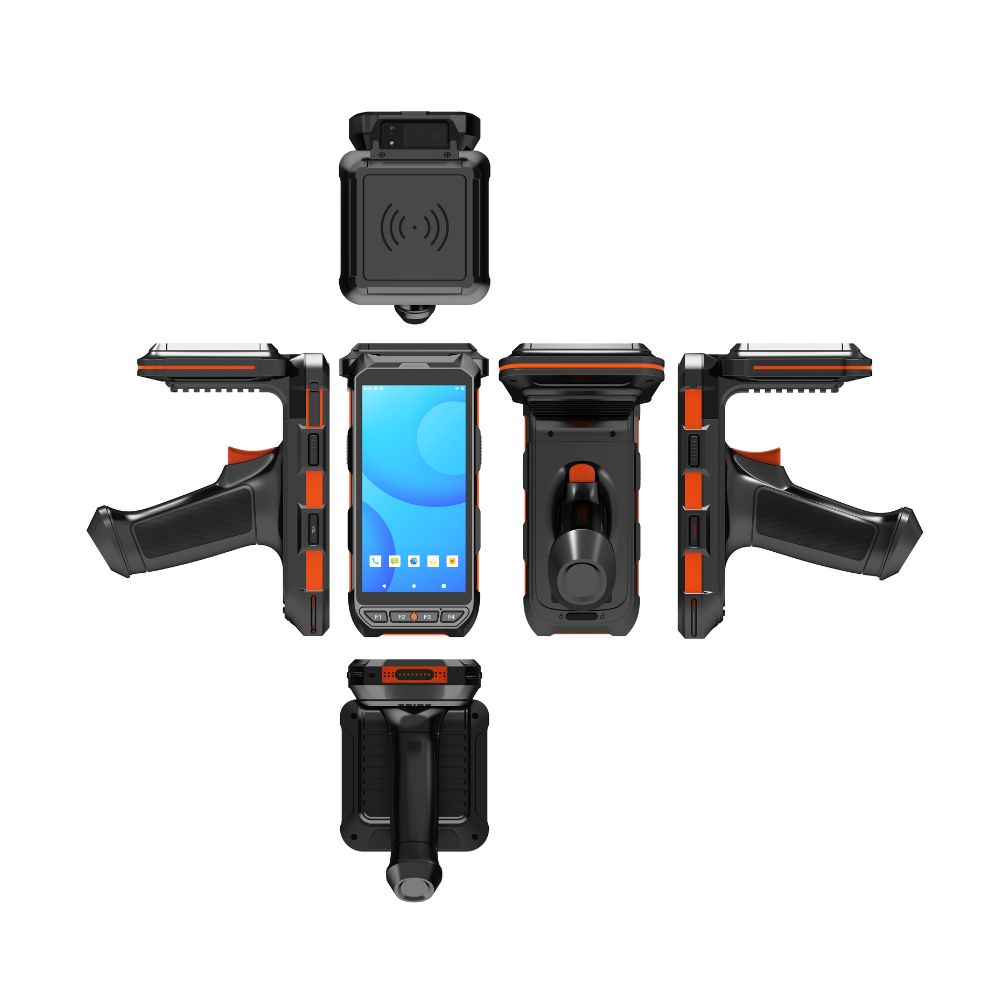
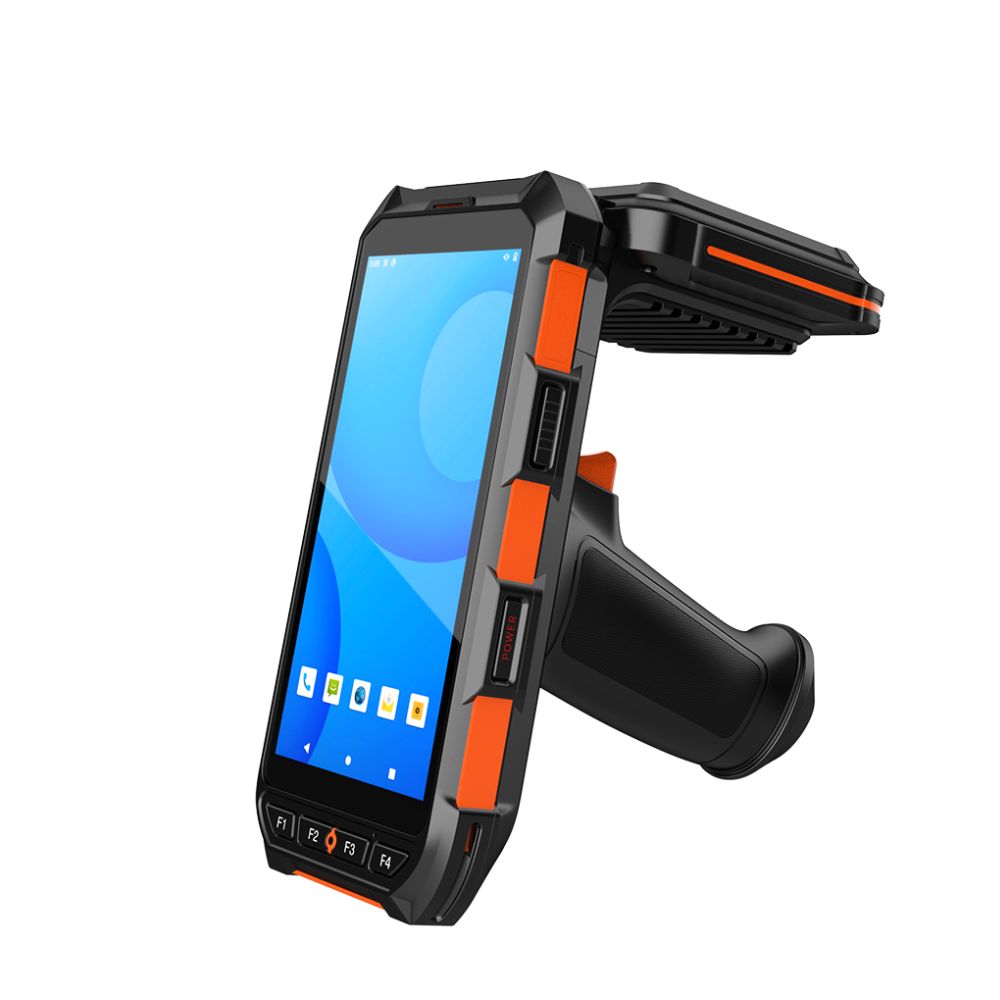
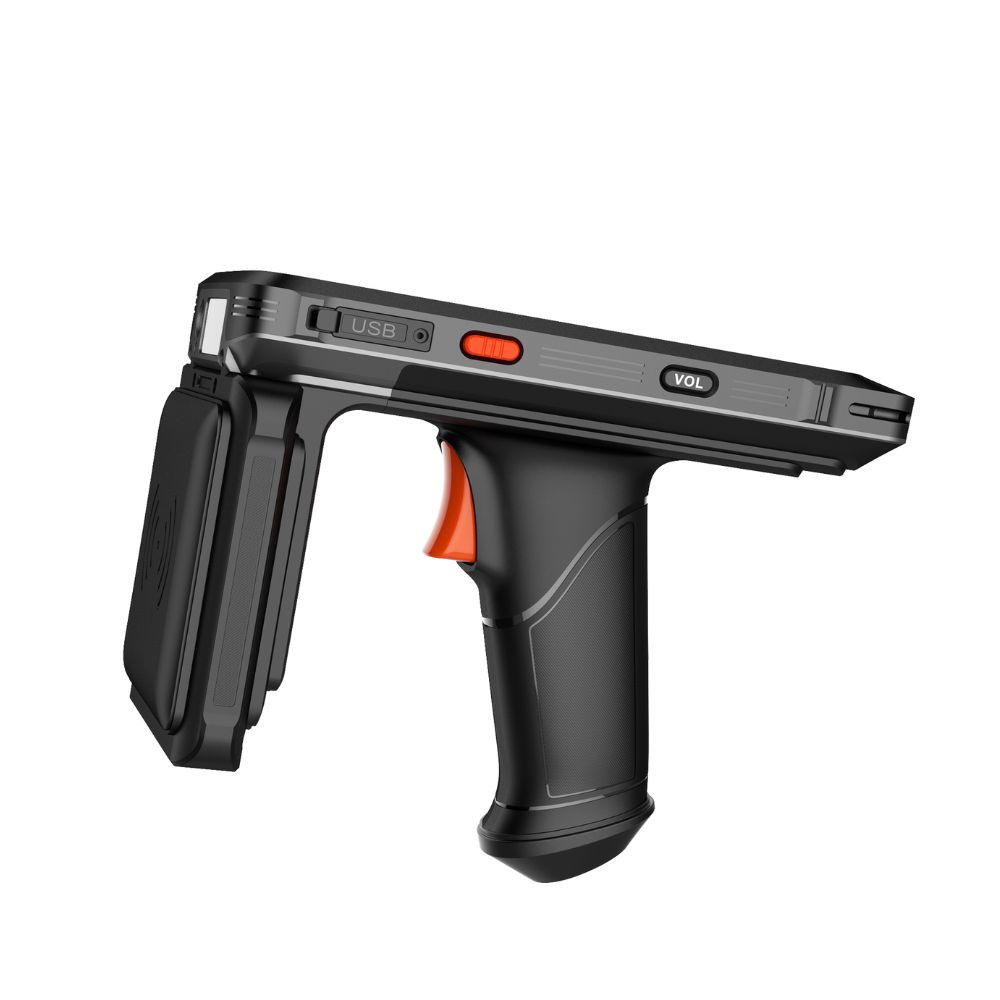

Handheld RFID Scanner for UHF Inventory and Asset Tracking
UHF RFID Scanner Device for Mobile Data Collection
A handheld RFID scanner is a portable RFID scanner device used to read and write RFID tag data during inventory counting, asset audits, logistics checks, and field operations.
This UHF handheld scanner supports contactless tag reading in the 860–960 MHz range and can combine RFID scanning, barcode capture, wireless data transfer, and Android-based application integration in one mobile terminal.
It is suitable for teams that need to identify tagged items away from a fixed reader station, such as warehouse aisles, retail shelves, equipment rooms, loading areas, or outdoor asset locations.
Technical Specifications
| Feature | Specification |
|---|---|
| Product Type | Handheld RFID scanner / UHF RFID scanner device |
| RFID Type | Passive UHF RFID reader-writer |
| Frequency | UHF 860–960 MHz, depending on regional regulations |
| Protocol | EPC UHF Gen2 / ISO/IEC 18000-63 |
| RFID Module Options | Impinj E710 or R2000-based configuration, depending on model |
| Operating System | Android-based terminal |
| Barcode Support | 1D / 2D barcode scanning option |
| Connectivity | Wi-Fi, Bluetooth, USB, and optional mobile-network configuration depending on model |
| Read / Write Function | EPC reading, tag writing, data collection, and supported tag-memory operations |
| Data Interface | SDK, application integration, database upload, or system API depending on project setup |
| Display and Input | Touchscreen and physical keys depending on model |
| Battery | Rechargeable battery for mobile operation |
| Form Factor | Handheld terminal or wearable-style configuration depending on product version |
| Typical Use | Inventory counting, asset audits, warehouse operations, retail stock checks, and field scanning |
Actual read range depends on the RFID tag, reader power, antenna design, tag orientation, item material, environment, and software settings.
Typical Applications
- Warehouse Inventory
A handheld RFID scanner can help staff scan tagged cartons, pallets, bins, tools, or stock items during receiving, cycle counting, and stock verification. - Retail Stock Management
Retail teams can use handheld scanners to check item availability, compare shelf stock with system records, and identify tagged products by SKU or EPC. - Asset Tracking and Auditing
Organizations can scan tagged equipment, IT assets, tools, documents, or fixed assets during routine audits and maintenance checks. - Logistics and Supply Chain
Operators can use RFID scanner devices to verify outbound goods, inbound shipments, returnable containers, or transport assets. - Manufacturing Operations
Production teams can identify work-in-process items, tools, fixtures, components, or finished goods when those items are equipped with compatible RFID tags.
Handheld RFID Scanner vs Barcode Scanner
| Comparison Point | Handheld RFID Scanner | Barcode Scanner |
|---|---|---|
| Reading Method | Contactless RFID tag reading | Optical barcode or QR code scanning |
| Line of Sight | Usually not required | Required |
| Multi-Item Reading | Possible with UHF RFID tags | Usually one code at a time |
| Data Writing | Supported on writable RFID tags | Not supported |
| Tag Requirement | Requires compatible RFID tags | Requires printed barcode or QR code |
| Best Fit | Bulk inventory, asset audits, logistics, item tracking | Product lookup, checkout, document scanning, simple ID capture |
A barcode scanner is suitable when each item can be scanned individually and the printed code is visible.
A handheld RFID scanner is suitable when the project needs faster item identification, non-line-of-sight reading, or data capture from multiple tagged items in one workflow.
Which Scanner Configuration Fits Your Workflow?
| Project Requirement | Recommended Configuration | Reason |
|---|---|---|
| Long-range UHF inventory | UHF RFID handheld scanner | Supports passive UHF tag reading for item-level scanning |
| RFID plus barcode workflow | RFID + 1D/2D barcode model | Allows both RFID tags and printed codes to be captured |
| Enterprise Android apps | Android terminal with SDK support | Easier integration with mobile inventory or ERP applications |
| Higher RFID performance | E710 or R2000-based RFID module | Suitable for demanding read-rate or reader-sensitivity requirements |
| Indoor warehouse use | Standard handheld configuration | Suitable for stock counting, receiving, and shelf checks |
| Field or industrial use | Rugged configuration | Better suited to outdoor handling, mobile audits, or warehouse-floor use |
Choose the scanner according to the RFID tag type, required read distance, operating environment, software platform, barcode requirement, and user workflow.
A higher-performance RFID module can improve scanning capability, but the final result still depends on the tag, antenna, reader settings, and deployment conditions.
How a Handheld RFID Scanner Works in an Inventory Audit
First, each item or asset is tagged with a compatible UHF RFID tag and linked to a record in the inventory or asset-management system.
During an audit, staff use the handheld RFID scanner to read nearby tags. The device collects EPC or tag data and sends the results to the software through the configured application or connection method.
The system compares scanned tag data with the expected inventory list and can mark items as found, missing, misplaced, received, transferred, or checked.
Before deployment, the scanner should be tested with the actual tags, tagged items, reading distance, software workflow, and operating environment.
Need a Handheld RFID Scanner for Your Inventory System?
Contact JIA RFID with your tag type, scanning distance, software platform, barcode requirement, operating environment, and project quantity.
The team can recommend a suitable RFID scanner device configuration and prepare samples for reader, barcode, and software testing.
Frequently Asked Question
The top questions about handheld RFID scanner
A handheld RFID scanner is a portable RFID scanner device used to read RFID tags and collect item or asset data away from a fixed reader station.
Often, yes. “Scanner” usually emphasizes mobile data collection, while “reader” describes the RFID reading function.
Yes. As a UHF RFID reader-writer, the device can support tag writing when the selected tag, memory area, permissions, and software allow it.
Reading range depends on the RFID tag, reader power, antenna design, tag orientation, item material, surrounding interference, and software configuration.
It can be used in warehouse, logistics, retail, manufacturing, and field environments. The exact suitability depends on the rugged level, battery requirement, operating temperature, and protection rating of the selected model.
Confirm the RFID tag type, expected read distance, application scenario, barcode requirement, software platform, connectivity method, operating environment, and order quantity.
Related Products
Customize any types RFID tags from our factory to meet your own requirements.