
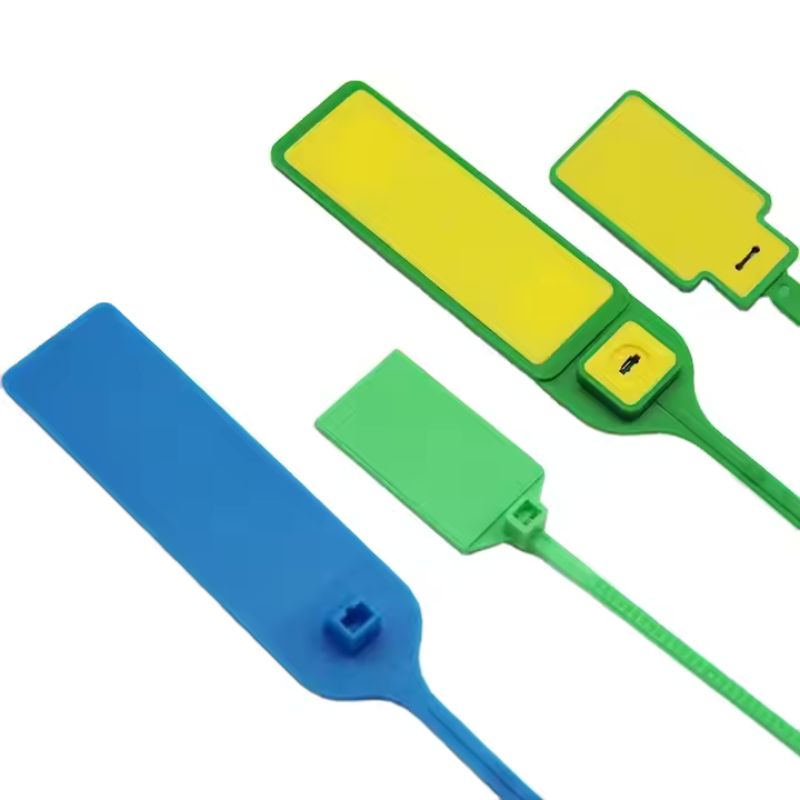
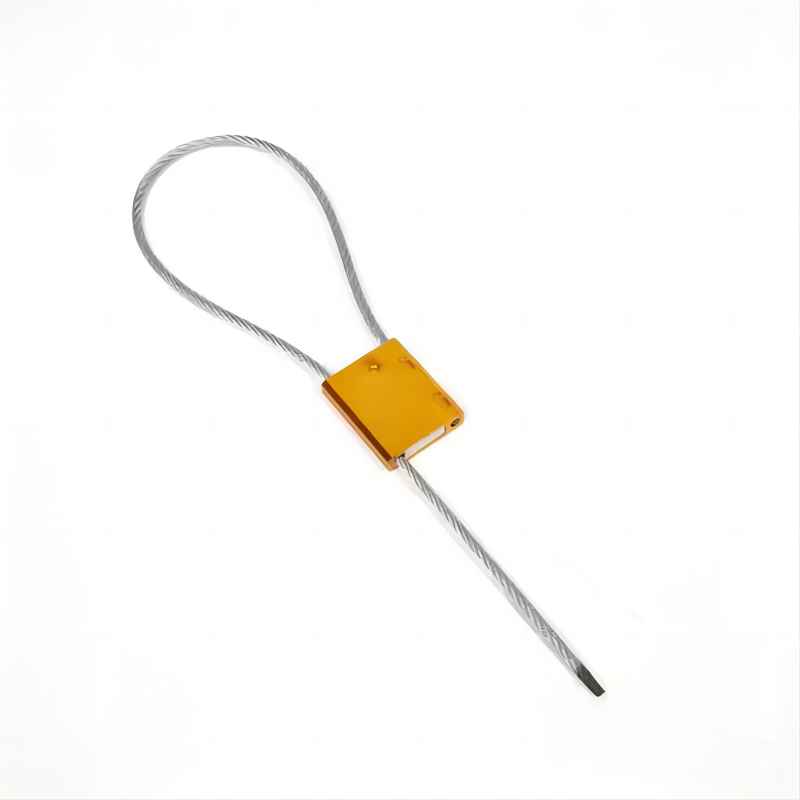
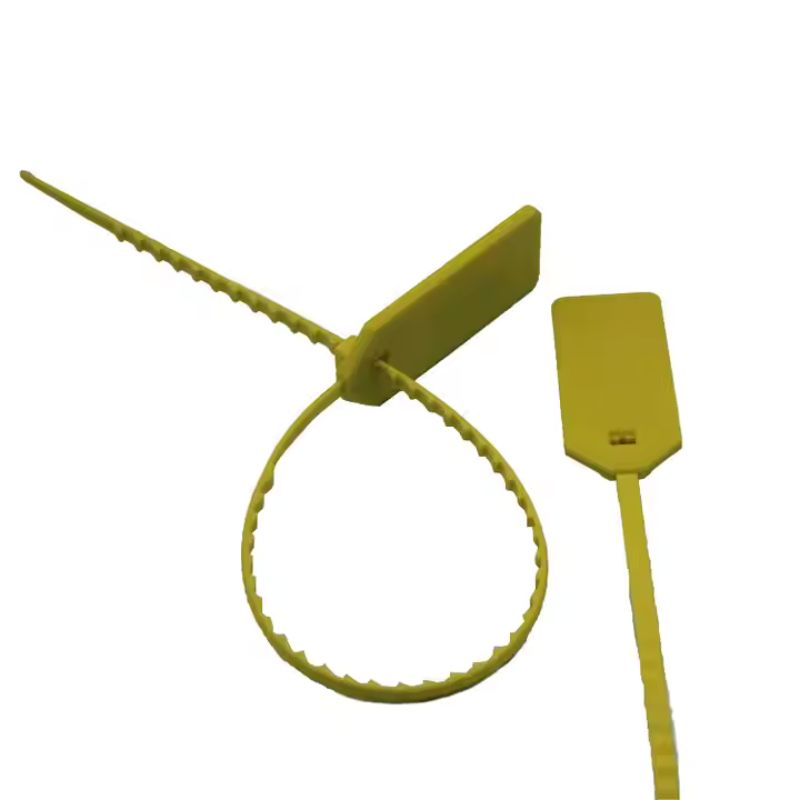
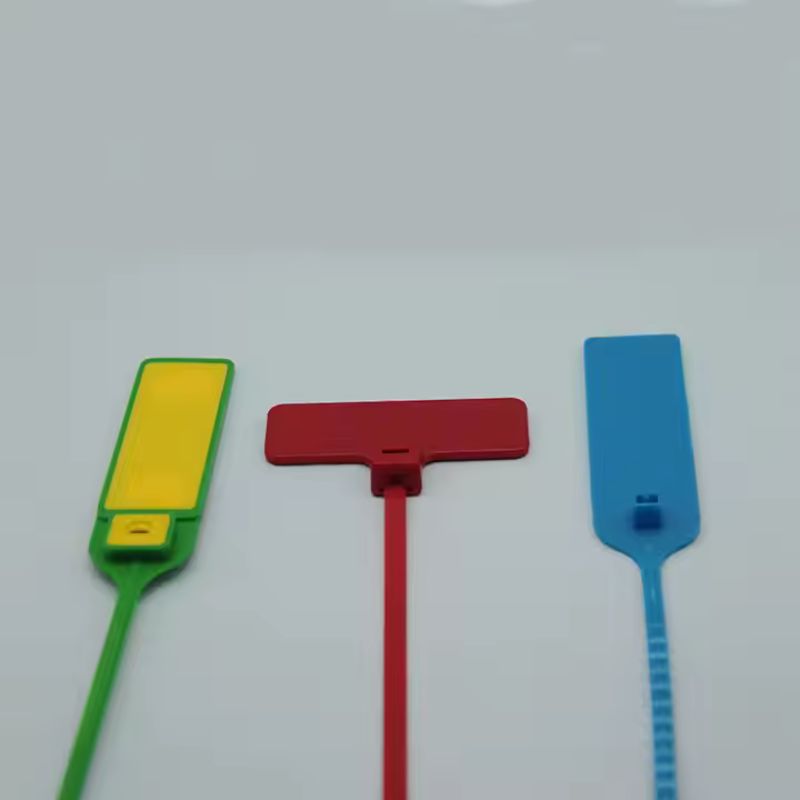
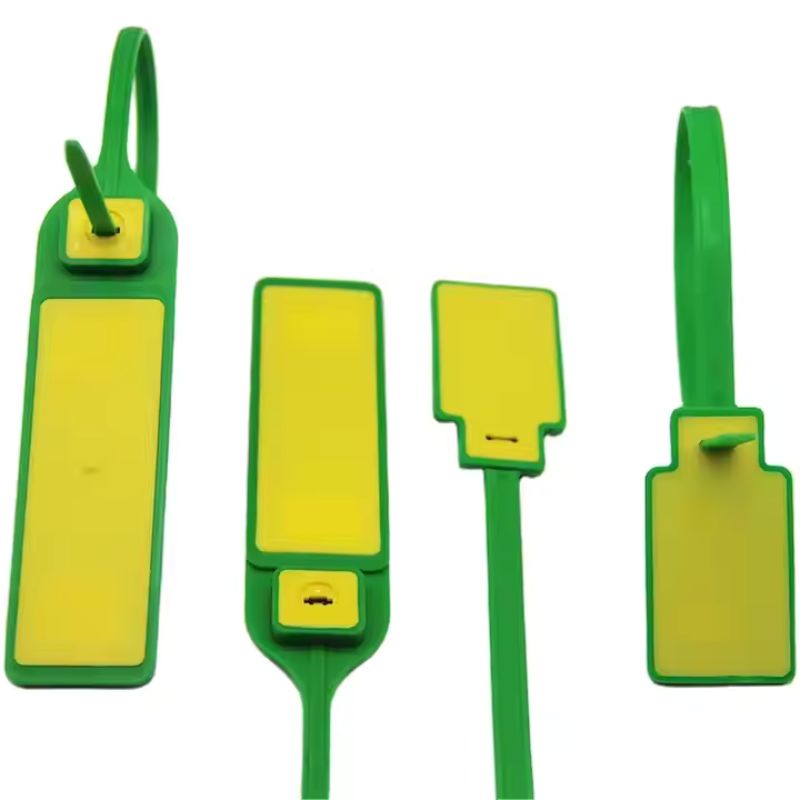

Safety Seal Tags RFID Cable Tie Tag Laser Numbering Ties
RFID Cable Tie Tags with Self-Locking Fastening
RFID cable seals are cable-tie style RFID tags used to identify, seal, and track assets that require a loop attachment.
They combine a self-locking tie structure with an embedded RFID transponder, allowing the tag to be fastened around cables, handles, valves, meters, containers, tools, or equipment
The terms RFID cable seal and RFID cable tie are often used for the same product. “Cable seal” emphasizes traceability and sealing, while “cable tie” describes the fastening structure.
Unlike a standard RFID label, an RFID cable seal can be attached to items where adhesive labels are unsuitable or where visible sealing and numbered identification are required.
Technical Specifications
| Feature | Specification |
|---|---|
| Product Type | RFID cable seal / RFID cable tie tag |
| RFID Type | Passive UHF RFID |
| Frequency | UHF 860–960 MHz, depending on regional regulations |
| Protocol | EPC UHF Gen2 / ISO/IEC 18000-63 |
| Material | Nylon, ABS, or project-specific plastic material |
| Structure | RFID tag body with integrated self-locking cable tie |
| Attachment Method | Loop fastening around cables, handles, pipes, valves, meters, or equipment |
| Read Range | Typically up to 3–5 m, depending on tag design, reader setup, and environment |
| Numbering Options | Laser numbering, printed serial number, barcode, or QR code |
| Encoding Options | EPC encoding, TID matching, serial-number matching, or database association |
| Surface Options | Plain, printed logo, warning text, asset ID, or custom label design |
| Environment | Indoor, warehouse, industrial, or outdoor use depending on selected material and sealing design |
| Customization | Tie length, tag body size, color, chip, printing, numbering, encoding, and packaging |
Read performance should be tested with the intended reader, asset material, cable position, and installation environment before bulk production.
Typical Applications
- Electrical Inspection Management
RFID cable seals can be attached to electrical cabinets, cable bundles, meters, and inspection points to identify equipment during routine checks. - Container and Logistics Identification
Cable tie RFID seals can be used on returnable containers, cages, tote boxes, racks, and transport equipment where loop fastening is practical. - Equipment and Tool Tracking
Maintenance teams can use RFID cable tie tags to identify tools, kits, portable equipment, or rented assets. - Utility and Meter Management
RFID cable seals can be applied to meters, valves, pipes, and utility access points for inspection, identification, or maintenance records. - Warehouse Inventory Control
Warehouses can use numbered RFID cable ties to identify assets that are difficult to label with adhesive RFID tags.
Which Cable Seal Configuration Fits Your Project?
| Project Requirement | Recommended Configuration | Reason |
|---|---|---|
| Basic asset identification | UHF RFID cable tie tag | Supports contactless scanning and visible numbering |
| Inspection point tracking | Laser-numbered RFID cable seal | Combines RFID data with readable serial identification |
| Outdoor or industrial use | Reinforced material and suitable sealing design | Helps improve durability in demanding environments |
| Container or rack identification | Longer cable tie length | Fits handles, loops, frames, or larger fastening points |
| Database-matched asset ID | Encoded EPC + printed serial number | Links physical marking with software records |
| Brand or safety labeling | Custom printed tag body | Supports logo, warning text, barcode, or QR code |
Choose the configuration according to the fastening point, required read distance, material exposure, numbering method, and software data format.
RFID Cable Seal vs Standard Cable Tie
| Comparison Point | Standard Cable Tie | RFID Cable Seal |
|---|---|---|
| Main Function | Physical bundling or fastening | Fastening plus RFID identification |
| Electronic Identification | No RFID chip | Embedded passive RFID transponder |
| Data Capture | Manual visual checking | Contactless scanning with compatible reader |
| Numbering | Optional printed or molded number | Laser number, printed code, or encoded RFID ID |
| Software Link | Not automatic | Can be linked to asset, inspection, or inventory records |
| Typical Use | Cable management and simple fixing | Asset tracking, inspection records, logistics, and equipment ID |
A standard cable tie is suitable when only fastening is required.
An RFID cable seal is suitable when the fastening point also needs contactless identification, serialized tracking, or database matching.
How RFID Cable Seals Work in Inspection Tracking
Each RFID cable seal is assigned a visible number and encoded RFID identifier.
The seal is attached to the asset, cable bundle, cabinet, valve, or container using the integrated self-locking tie.
During inspection, staff scan the RFID cable tie with a handheld or fixed UHF RFID reader. The software can match the scanned identifier with an equipment record, inspection status, location, or maintenance history.
If the seal is cut or replaced, the new seal number can be recorded in the system to maintain traceability.
Need RFID Cable Seals for Asset or Inspection Tracking?
Contact JIA RFID with your fastening point, cable diameter, required read distance, reader model, numbering format, and application environment.
The team can recommend a suitable RFID cable tie structure and prepare samples for encoding, laser numbering, and reader testing before bulk production.
Frequently Asked Question
The top questions about RFID cable seals
Most cable tie seal designs are intended for single-use fastening. If removed by cutting, a new seal is usually required.
Outdoor suitability depends on the selected material, sealing structure, UV exposure, moisture level, and installation environment. Samples should be tested before large-scale use.
Read range depends on the RFID chip, antenna design, reader power, reader antenna, tag orientation, surrounding materials, and installation position.
Confirm the fastening diameter, tie length, tag body size, reader model, required read range, material exposure, numbering format, encoding rules, and order quantity.
Related Products
Customize any types RFID tags from our factory to meet your own requirements.