
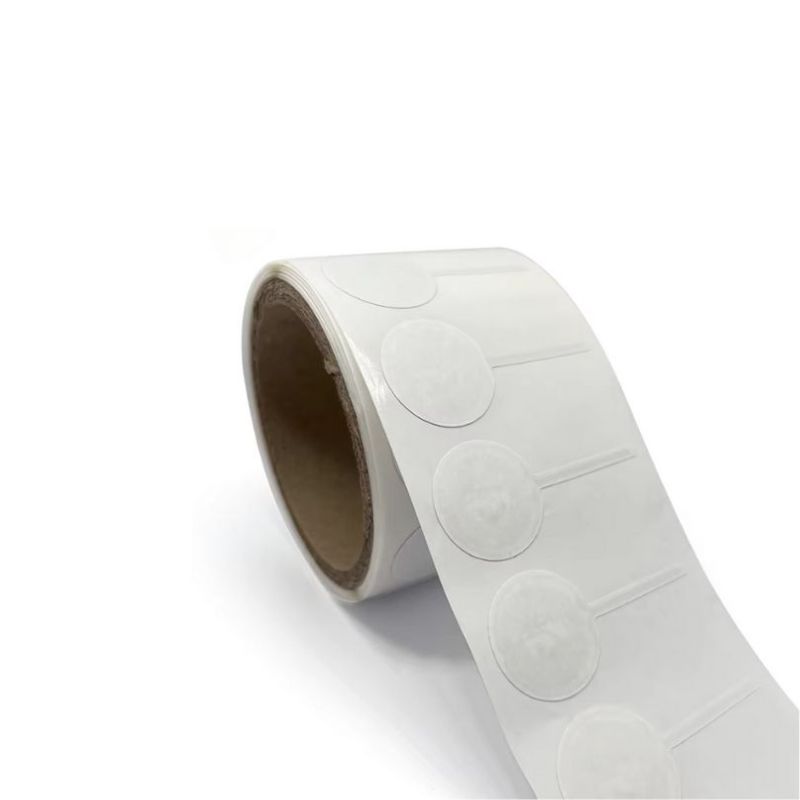
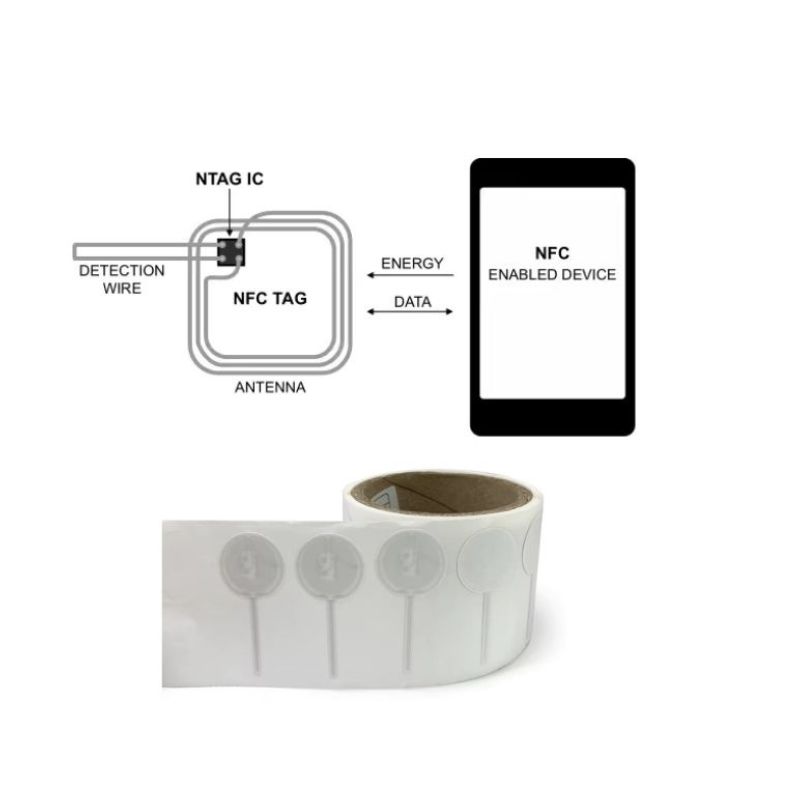
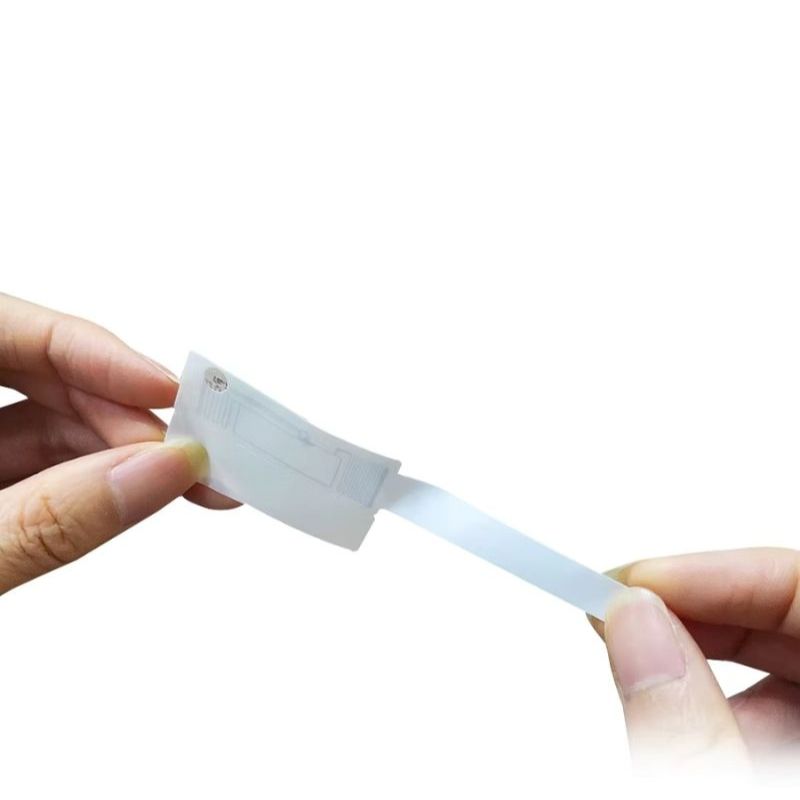
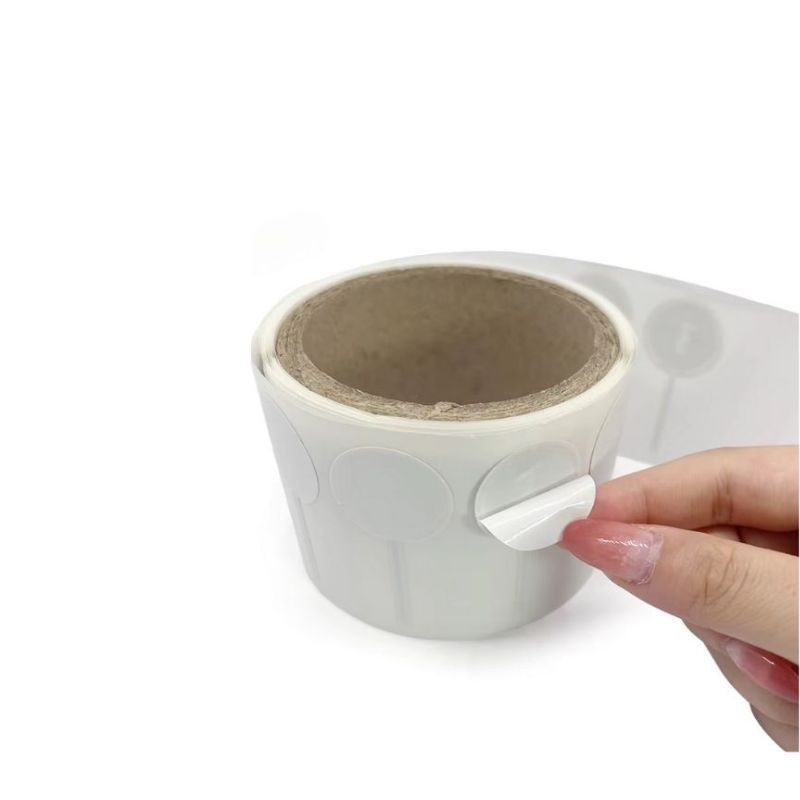

Custom UHF RFID Labels Jewelry Tags for Inventory Tracking
What Are UHF RFID Labels?
UHF RFID labels are ultra-high-frequency (UHF) radio-frequency identification tags designed for wireless tracking, scanning, and inventory control. These labels are embedded with RFID chips that transmit data when scanned by compatible readers, enabling fast, contactless identification over long read ranges (up to several meters).
At JIA RFID, we specialize in custom UHF RFID labels that are printable, adhesive-backed, and ready for integration into your supply chain, retail inventory, or jewelry product line.
Why Choose UHF RFID Labels?
- Long Read Range: Compared to LF or HF, UHF RFID provides longer scanning distances — ideal for warehouse shelves, bulk item scanning, and inventory automation.
- Perfect for Jewelry & Apparel: It is thin, lightweight, and printable—perfect for delicate items where discrete tracking is essential.
- Customizable: Add logos, barcodes, serial numbers or print directly onto the label face.
- Cost-Effective for High Volumes: Great for retail, logistics, libraries, healthcare, and asset tracking.
Custom UHF RFID Label Features
| Feature | Description |
|---|---|
| Frequency | UHF: 860–960 MHz |
| Chip Options | Alien H3, NXP UCODE, Impinj Monza, and more |
| Reading Range | 1m–8m (depends on chip, material, and environment) |
| Label Material | Paper, PET, synthetic film (custom) |
| Adhesive | Permanent, removable, or heat-resistant options |
| Surface | Printable surface for logos, barcodes, and QR codes |
| Encoding Services | EPC writing, locking, TID + UID support |
| Label Sizes | Standard or custom die-cut sizes available |
We also offer a roll format for easy application with printers and automatic labeling equipment.
Applications of UHF RFID Labels
UHF RFID labels are used across industries to streamline operations, reduce manual errors, and gain visibility across the supply chain.
- Ideal For:
- Jewelry Retail – Tagging rings, bracelets, earrings, and more
- Apparel & Garment Tracking – Inventory control, anti-counterfeiting
- Retail Stores – Item-level tracking and automated checkout
- Warehouse & Logistics – Pallet tracking, carton-level identification
- Asset Management – Hospitals, offices, libraries, tool tracking
Customization Options
At JIA RFID, we provide OEM & ODM services tailored to your application.
You can customize:
- Label size and shape
- Chip type and memory
- Surface print: logo, serial number, barcode, QR code
- Encoding (EPC, TID, user memory)
- Adhesive (standard, removable, high-temp)
We also assist with sample testing and compatibility verification to ensure successful deployment.
Why Choose JIA RFID?
With over 10 years of experience, we’re trusted by clients worldwide to deliver high-performance RFID solutions with fast turnaround, technical support, and global shipping.
- Manufacturer-direct pricing
- Bulk production and sample options
- Global shipping & support
- Quality assurance & chip testing
Request a Free Sample or Quote Today
Need to test compatibility with your existing RFID reader or POS system?
Let us help you secure and streamline your jewelry inventory.
👉 Request a Quote
📱 Or WhatsApp us at: +86 138 2318 6864
Frequently Asked Question
The top questions about UHF RFID Labels
UHF labels operate at 860–960 MHz and have longer read ranges, making them ideal for large-scale inventory. HF (13.56 MHz) is used for shorter-range applications like NFC or payment systems.
Yes — we offer custom printing services directly on the label surface for logos, QR codes, barcodes, and serial numbers.
Absolutely. Our labels are designed for compatibility with thermal transfer printers like Zebra, SATO, and more. We also provide technical guidance for setup.
Yes! Our UHF RFID labels are compatible with most standard UHF readers and antennas.
RFID technology operates at various frequencies, each with unique characteristics and governed by ISO standards. Here are the most common RFID frequency categories:
125/134 kHz – RFID LF (Low Frequencies): Governed by the ISO 18000-2 standard, these low-frequency tags have a reading distance of a few centimeters and a low data transmission speed. They are primarily used for animal identification, vending machines, burglar alarms, and access control.
13.56 MHz – RFID HF (High Frequencies): Governed by the ISO 18000-3 standard, these high-frequency tags have a reading distance of up to 10 centimeters and a low to medium data transmission speed. This frequency is also known as NFC (Near Field Communication) and is increasingly popular because many smartphones can act as readers, enabling various innovative applications.
860-960 MHz – RFID UHF (Ultra High Frequencies): Governed by the ISO 18000-6 standard, UHF tags have a reading distance of several meters, even with passive tags. There are variations between UHF readers using US and European standards, but the RAIN standard ensures compatibility with both. UHF tags are widely used for logistics, inventory management, timekeeping, and access control.
Low-frequency (LF) readers are typically designed to read one tag at a time, such as the ID of a single livestock ear tag. In contrast, high-frequency (HF) and especially ultra-high frequency (UHF) readers are capable of reading multiple RFID tags simultaneously. This allows them to efficiently scan a stack of tagged books or a pallet of goods as they pass through a reader gate.
The most affordable RFID tags can cost just a few cents and are typically designed as adhesive labels. These low-cost tags are often used in retail or logistics for single-use applications in non-durable settings. The price of RFID tags can vary based on factors such as the chip’s capabilities, memory size, and durability against conditions like heat, impact, freezing, sunlight, and chemicals. Costs can range up to several dollars depending on these factors. Additionally, active tags, which include a battery, are generally more expensive than passive tags.
Related Products
Customize any types RFID tags from our factory to meet your own requirements.