
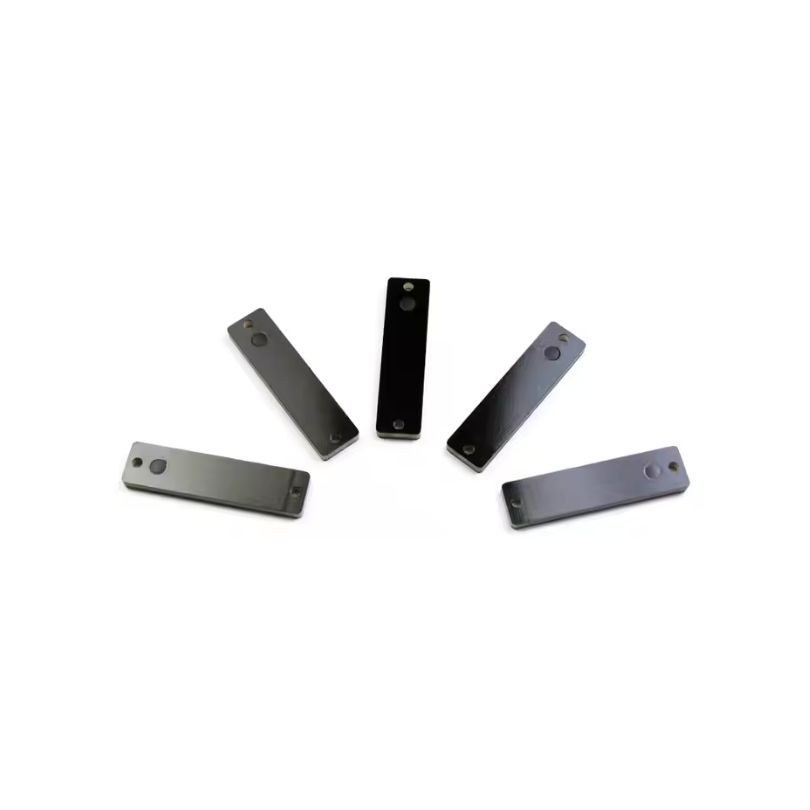

PCB RFID Tag for Heat-Resistant Asset Tracking
Anti-Metal RFID Tag for Industrial Equipment
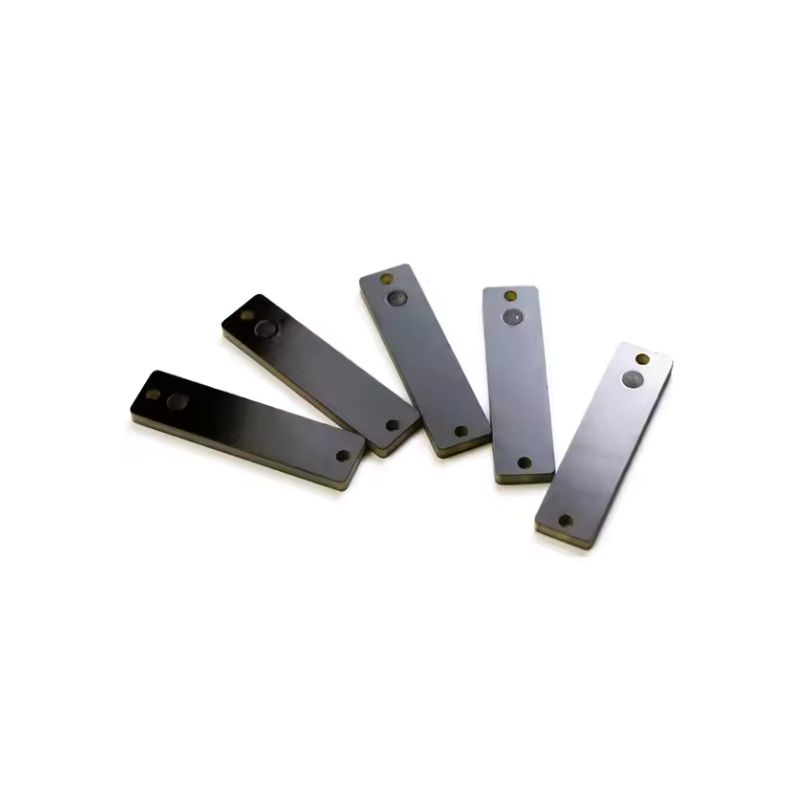
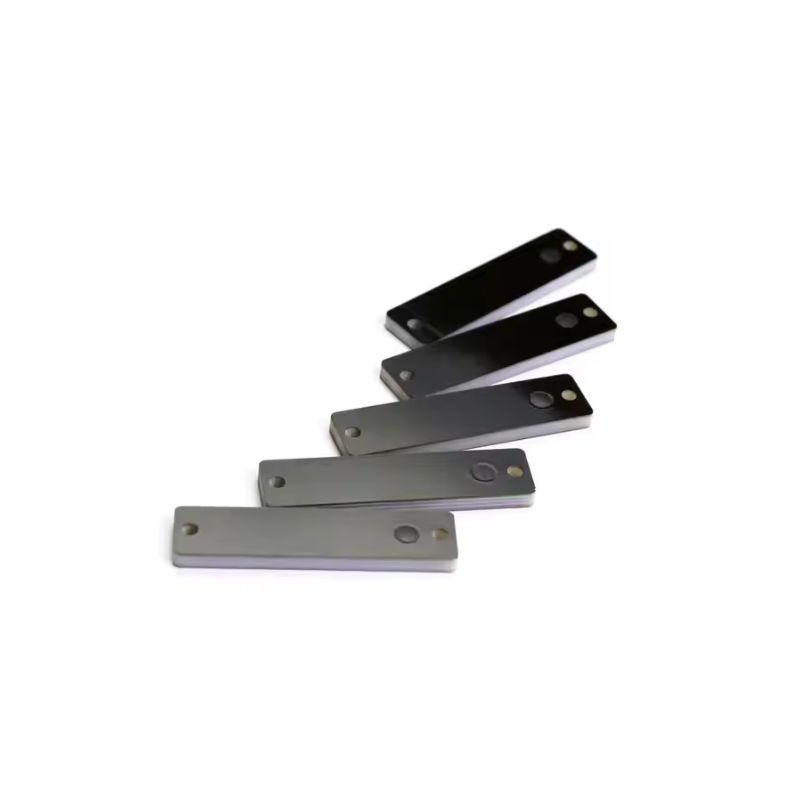
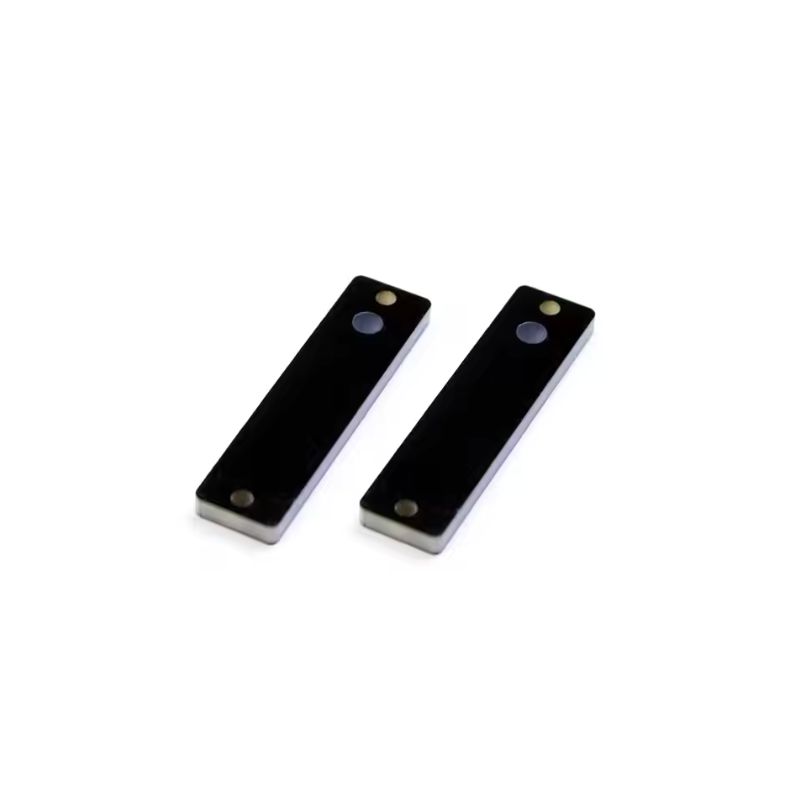
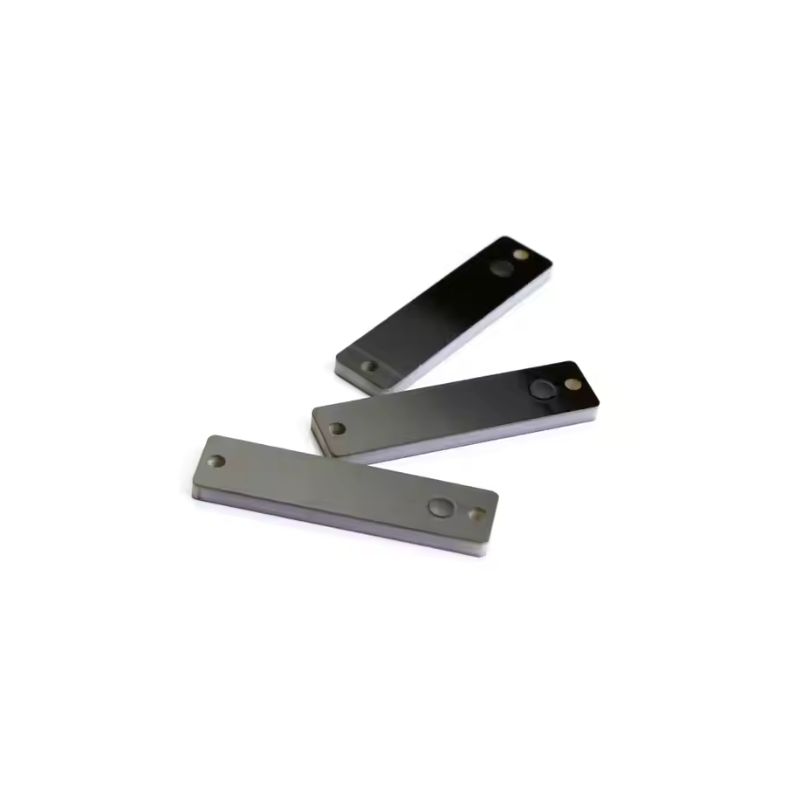
A PCB RFID tag is a passive identifier built on an FR4 printed circuit board substrate for tools, fixtures, machinery, containers, IT hardware, and other industrial assets.
This product uses a purpose-designed antenna structure to support RFID communication on conductive surfaces where a standard label may lose performance. Its low-profile construction makes it suitable when a compact anti metal RFID tag is preferred over a thick molded tag.
Separate HF and UHF configurations are available. HF supports controlled close-range identification, while UHF is designed for longer-range and multi-tag asset reading.
Technical Specifications
| Feature | Specification |
|---|---|
| Product Type | Passive PCB RFID tag |
| Primary Use | Identification of metal tools, equipment, containers, and industrial assets |
| Substrate | FR4 fiberglass-reinforced epoxy |
| On-Metal Design | Purpose-designed PCB antenna structure |
| Frequency Options | HF 13.56 MHz / UHF 860–960 MHz |
| HF Protocol | ISO/IEC 15693, ISO/IEC 18000-3, or ISO/IEC 14443 Type A, depending on chip |
| UHF Protocol | EPC UHF Gen2 / ISO/IEC 18000-63 |
| HF Chip Options | ICODE SLIX or SLIX2; NTAG or MIFARE options subject to reader and antenna requirements |
| UHF Chip Options | UCODE 9, UCODE 9xe, or another current EPC Gen2 IC |
| Standard Sizes | 5 × 5 mm, 7 × 7 mm, 8 × 8 mm, or custom dimensions |
| HF Read Range | Approximately 1–3 cm, depending on design and reader |
| UHF Read Range | Up to 6 m for suitable tag dimensions and installation conditions |
| Memory | Depends on the selected IC |
| Operating Temperature | -40°C to +100°C |
| Storage Temperature | -40°C to +150°C |
| Protection Rating | IP68 for the specified finished construction; test conditions should be confirmed |
| Installation | Adhesive, embedded mounting, or screw fixing where dimensions allow |
| Customization Options | Size, antenna design, mounting holes, chip, encoding, logo, QR code, barcode, serial number, and packaging |
Chip availability, memory, data retention, and write endurance should be confirmed for the IC selected for production.
Typical Applications
- Tool and Fixture Tracking
PCB tags can identify molds, dies, gauges, jigs, hand tools, and production fixtures during storage, use, inspection, and maintenance. - Metal Containers and Returnable Assets
Warehouses can apply tags to bins, racks, cages, pallets, and returnable transport items for inventory and movement-event records. - Production and Work-in-Process Control
Manufacturers can link a tag identifier to a component, carrier, workstation, production order, or quality-control record. - IT and Data Center Equipment
Compact PCB tags can identify servers, network devices, cabinets, storage hardware, and other equipment with limited mounting space. - Laboratory and Technical Assets
Tags can connect instruments and equipment with calibration records, assigned departments, inspection dates, or service history.
How Manufacturers Use PCB RFID Tags for Tool Control
In a typical tool-management deployment, each tool or fixture receives a PCB tag with a unique RFID identifier.
The identifier is linked to an asset record containing information such as tool type, storage position, assigned production area, calibration date, maintenance status, or responsible department.
A UHF system can support batch inventory checks and movement records at tool-room entrances. An HF system may be selected when the process requires controlled identification at a specific workstation.
Performance depends on tag dimensions, reader type, antenna placement, asset spacing, mounting position, and software configuration.
HF vs UHF PCB RFID Tag
| Comparison Point | HF PCB RFID Tag | UHF PCB RFID Tag |
|---|---|---|
| Frequency | 13.56 MHz | 860–960 MHz |
| Typical Protocol | ISO/IEC 15693 or ISO/IEC 14443 Type A | EPC UHF Gen2 / ISO/IEC 18000-63 |
| Reading Distance | Approximately 1–3 cm for this product range | Up to 6 m for suitable designs |
| Reading Method | Controlled close-range identification | Longer-range and multi-tag inventory reading |
| Reader Type | HF or NFC-compatible reader, depending on chip | UHF handheld or fixed RFID reader |
| Best Fit | Workstation checks, maintenance records, embedded identification | Tool inventories, container tracking, warehouse assets, production movements |
| Main Selection Factor | Precise short-range interaction | Reading distance and batch identification |
Choose HF when the process requires one asset to be identified at a controlled close distance.
Choose UHF when the application requires longer reading distance, faster inventory checks, or detection of multiple tagged assets within one reader zone.
Need a PCB RFID Tag for High-Temperature Equipment?
Contact JIA RFID with your mounting surface, available installation space, operating temperature, reader model, and required read distance.
The technical team can recommend an HF or UHF PCB design and provide samples for read-range, mounting, and thermal validation before bulk production.
Frequently Asked Question
The top questions about PCB RFID tag
A PCB RFID tag is a passive RFID tag built on an FR4 printed circuit board substrate. It is used where compact dimensions, durable construction, or equipment integration is required.
Yes. This model uses an antenna structure designed for installation on conductive surfaces.
Yes. These heat resistant RFID tags have a specified operating range of -40°C to +100°C. Suitability should be confirmed against the actual temperature cycle and exposure duration.
No. The published +150°C value is the storage-temperature limit. The stated operating maximum is +100°C.
No. Read distance depends on tag dimensions, antenna design, reader power, mounting surface, tag orientation, and the surrounding environment.
UHF EPC Gen2 tags support multi-tag inventory reading. HF multi-tag capability depends on the selected protocol, reader, antenna, and tag arrangement.
The finished construction is specified as IP68. Confirm the applicable immersion depth, duration, encapsulation, and test conditions for the selected model.
The minimum order quantity is 500 pcs.
Related Products
Customize any types RFID tags from our factory to meet your own requirements.