



NFC Passive Tag for Metal Surfaces
Anti Metal NFC Sticker for Tap-Based Identification
An NFC Passive Tag is a battery-free 13.56 MHz tag that stores data and communicates when tapped by an NFC-enabled phone or reader.
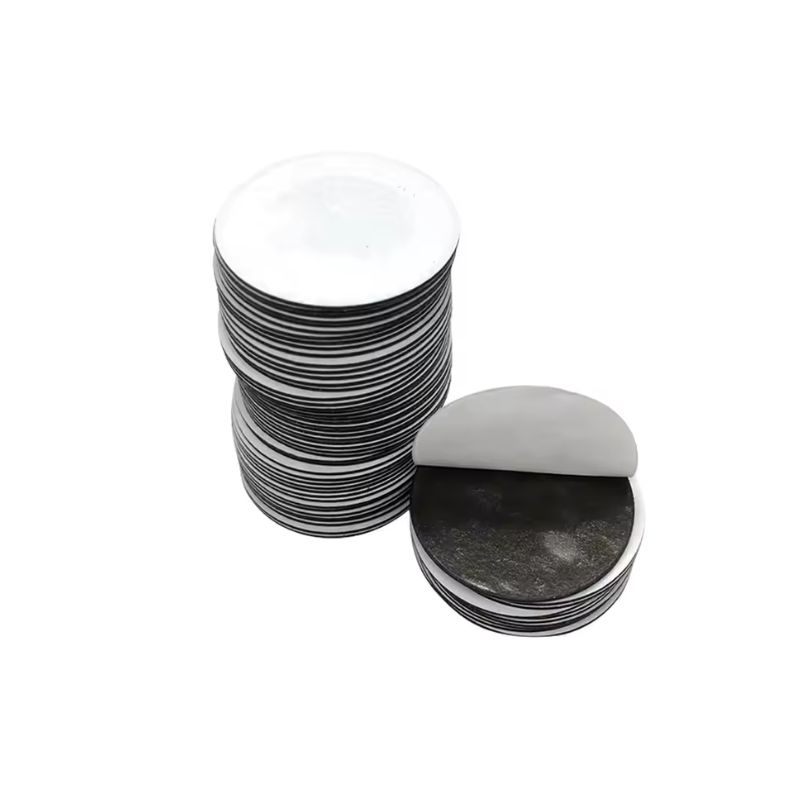
This product is an anti metal NFC sticker designed for use on steel, aluminum, iron, electronics, tools, equipment, and other conductive surfaces. It includes a ferrite shielding layer that helps reduce metal interference during NFC reading.
The tag is suitable for short-range applications such as asset identification, product authentication, equipment maintenance records, digital product pages, access badges, and interactive customer engagement.
NFC Passive Tag Key Features
- Passive NFC Operation
The tag does not require a battery. It is powered by the electromagnetic field from a compatible NFC phone or reader. - Ferrite Shielding Layer
The ferrite layer supports NFC communication when the tag is mounted on conductive surfaces. - Programmable NFC Memory
The tag can store URLs, IDs, product information, maintenance links, authentication data, or app-triggered actions, depending on chip memory and software. - Adhesive Sticker Format
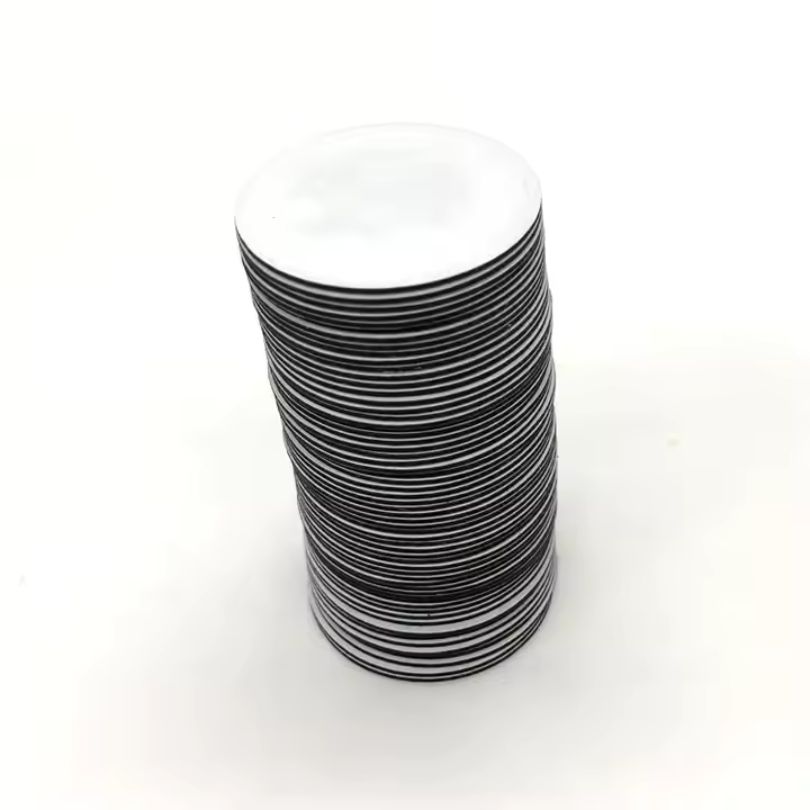
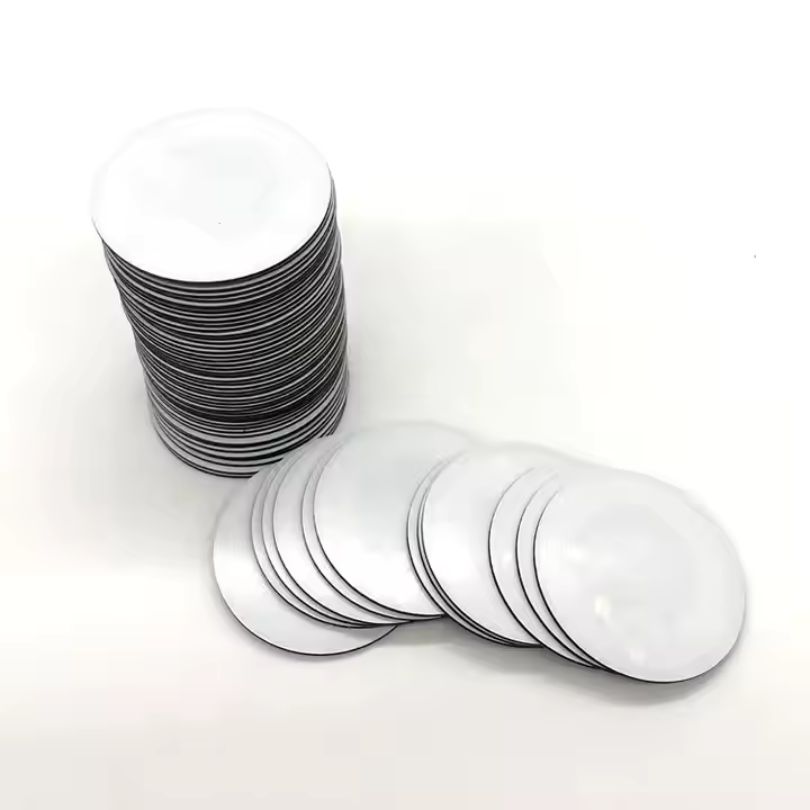
The slim sticker structure allows direct application to product surfaces, tools, packaging, badges, displays, or equipment housings.
NFC Passive Tag Technical Specifications
| Feature | Specification |
| Product Type | NFC Passive Tag / anti metal NFC sticker |
| Main Application | Tap-based identification on metal and conductive surfaces |
| Frequency | 13.56 MHz |
| Protocol | ISO/IEC 14443A |
| Standard Chip | NTAG213 |
| Optional Chips | NTAG216, NTAG424, or project-specific NFC chips |
| User Memory | 144 bytes with NTAG213 |
| Reading Distance | Up to 4 cm |
| Material Structure | PET face layer, ferrite shielding layer, aluminum antenna |
| Adhesive | Industrial-grade acrylic adhesive |
| Dimensions | Customizable, such as 30 mm × 20 mm |
| Operating Temperature | -25°C to +70°C |
| Data Retention | 10+ years |
| Read/Write Cycles | Up to 100,000 cycles |
| Customization Options | Size, shape, chip, printing, encoding, UID matching, logo, QR code, packaging |
| MOQ | 500 pcs |
NFC Passive Tag Typical Applications
- Asset Tracking
Used to identify tools, electronics, equipment, cabinets, and other assets where a tap-to-read NFC workflow is preferred. - Product Authentication
Brands can use NFC passive tags to link physical products to verification pages, serial records, or anti-counterfeit systems. - Equipment Maintenance
Maintenance teams can attach NFC stickers to machines or panels to access service logs, inspection records, or repair instructions. - Interactive Marketing
Retail and product teams can use NFC tags to launch product information, videos, registration pages, manuals, or promotions. - Access and Identification
Anti metal NFC tags can be used on selected badges, doors, lockers, or devices when the NFC reader and mounting surface are compatible.
Application Case: Equipment Maintenance Records
A maintenance team needed a simple way to access service records for metal control cabinets and tools. Printed labels were easy to damage, and QR codes required camera scanning under suitable lighting.
The team applied anti metal NFC stickers to selected assets. Each tag was encoded with a link to a maintenance record page and matched to the asset ID in the internal system.
Technicians could tap the tag with an NFC-enabled phone to open the record page. Final performance depended on tag placement, phone model, surface material, and whether NFC was enabled.
Anti Metal NFC Tag vs Standard NFC Sticker
| Comparison Point | Standard NFC Sticker | Anti Metal NFC Tag |
| Mounting Surface | Best for paper, plastic, glass, and non-metal surfaces | Designed for metal and conductive surfaces |
| Performance on Metal | Usually unreliable when attached directly to metal | Ferrite layer helps reduce metal interference |
| Structure | NFC chip, antenna, adhesive layer | NFC chip, antenna, ferrite shielding layer, adhesive layer |
| Read Distance | Short range, depending on phone or reader | Short range, up to 4 cm depending on installation |
| Best Use Cases | Packaging, posters, cards, plastic products | Tools, electronics, cabinets, machinery, metal product labels |
| Cost Level | Usually lower | Usually higher due to ferrite layer |
A standard NFC sticker is suitable for non-metal surfaces. When placed directly on metal, the NFC antenna may be affected and scanning may fail.
An anti metal NFC tag adds a ferrite shielding layer between the NFC antenna and the metal surface. This makes it the better choice for tools, equipment, electronics, metal packaging, cabinets, and industrial assets.
Need NFC Passive Tags for Metal Products or Equipment?
For metal-surface NFC applications, the tag structure should match the mounting material, available label space, phone reading position, chip memory, and encoded content.
Contact JIA RFID to discuss your NFC project, including NTAG213, NTAG216, NTAG424, URL encoding, UID matching, logo printing, QR code printing, adhesive selection, and sample testing on the actual product surface before bulk production.
Frequently Asked Question
The top questions about NFC Passive Tag.
An NFC Passive Tag is a battery-free NFC tag that stores data and communicates with a compatible NFC phone or reader at 13.56 MHz.
Standard NFC tags are usually unreliable on metal. Anti metal NFC tags use a ferrite shielding layer to reduce interference from conductive surfaces.
An anti metal NFC sticker is an NFC label with a ferrite layer and adhesive backing, designed for placement on metal or conductive surfaces.
Many NFC-enabled Android phones, iPhones, and industrial NFC readers can read the tag when they support ISO/IEC 14443A. Compatibility depends on device model, NFC settings, chip type, and software.
The reading distance is up to 4 cm, depending on the phone or reader, tag size, mounting surface, and environment.
Yes. It can be programmed with URLs, IDs, text records, app actions, or other NFC data using compatible NFC software or encoding equipment.
Yes. The tag can link a product to a verification page, database record, or authentication workflow. Security level depends on the chip type and system design.
The MOQ is 500 pcs.
Recommended details include mounting surface, tag size, chip type, memory requirement, print artwork, encoded content, application scenario, reader or phone model, adhesive requirement, and quantity.
Related Products
Customize any types RFID tags from our factory to meet your own requirements.