
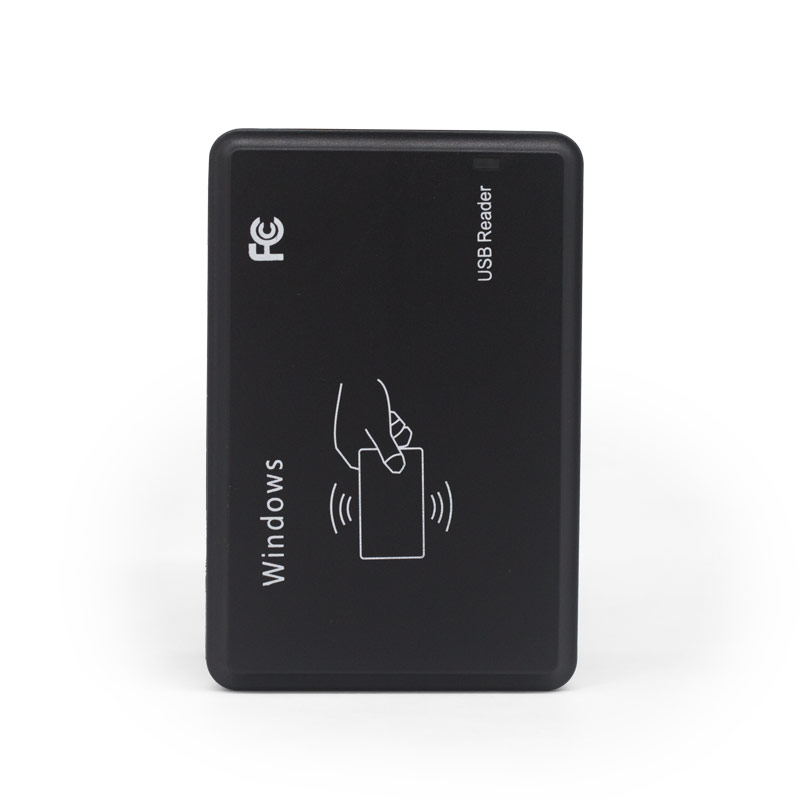
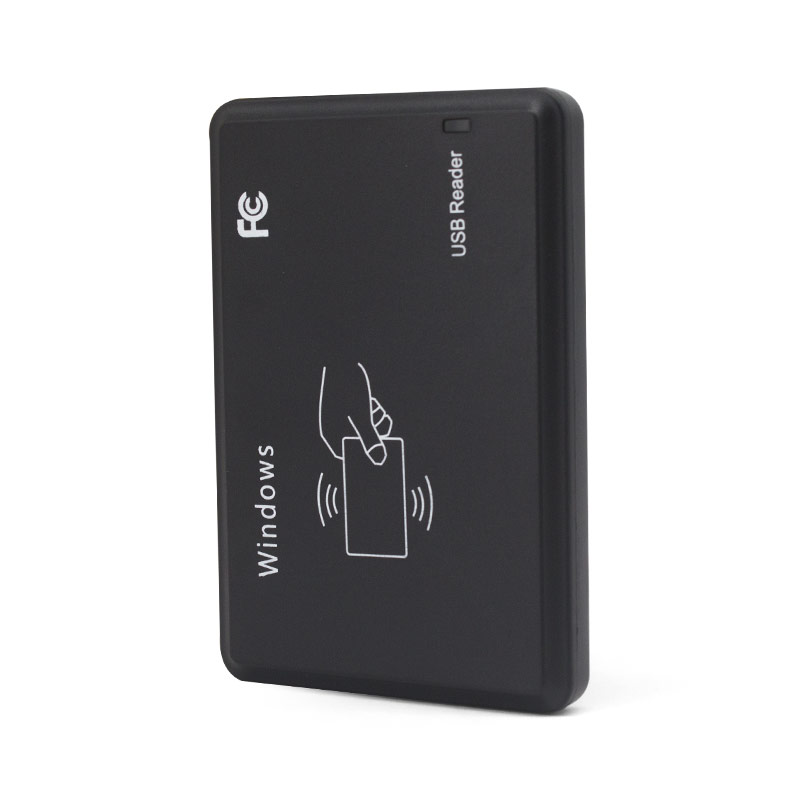
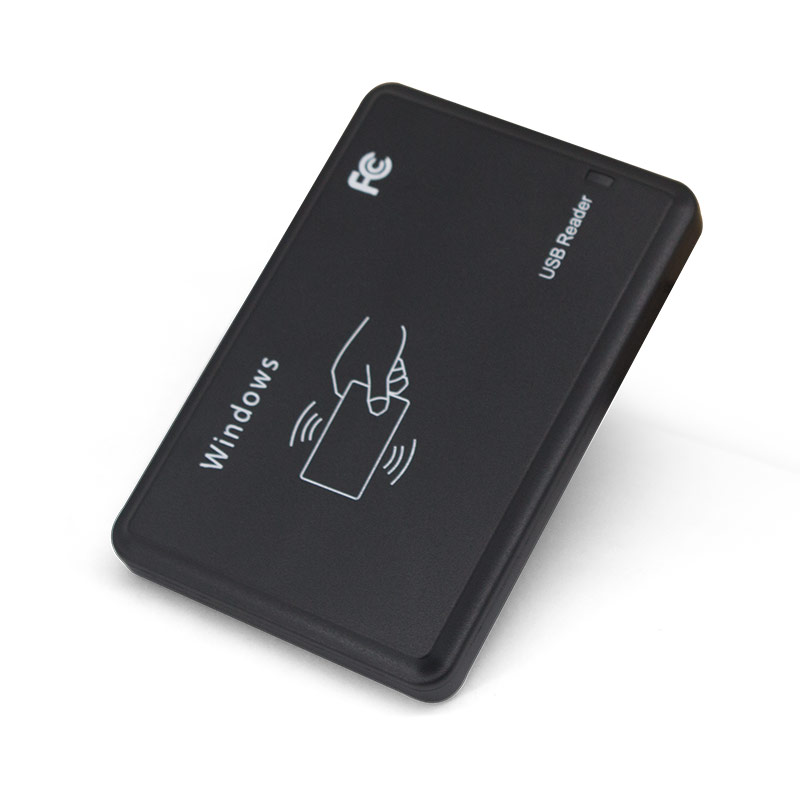
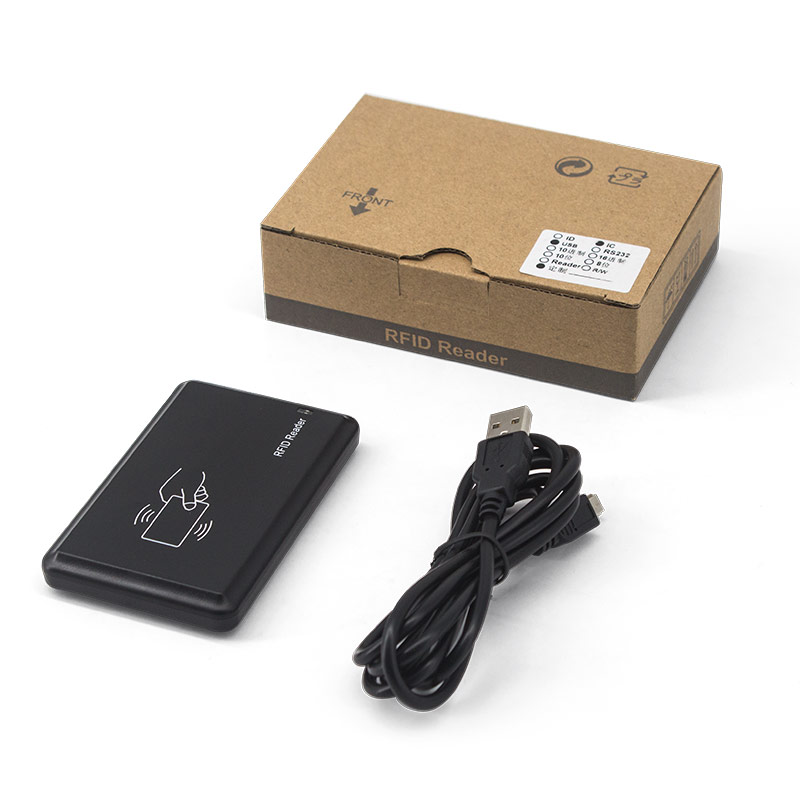

125KHz Low Frequency RFID Reader
125kHz Desktop RFID Reader for Close-Range Identification
A low frequency RFID reader reads compatible passive LF RFID tags, cards, and key fobs at short range.
This product is a 125khz RFID reader in a compact desktop format for local tag reading, credential enrollment, and system testing.
It should be selected according to tag chip, output interface, read distance, software format, and installation environment.
Low Frequency RFID Reader Key Features
- Desktop Reading Format
Designed for workstation use, card enrollment, tag testing, and local data capture. - Multiple Interface Options
USB, RS232, RS485, and Wiegand 26 options support different PC, controller, and access-system connections. - Controlled Close-Range Scanning
Short read distance helps operators scan one credential at a time during registration or verification.
Low Frequency RFID Reader Technical Specifications
| Feature | Specification |
| Product Type | Low frequency RFID reader / desktop RFID reader |
| Frequency | 125 kHz LF |
| Supported Tag Type | Passive 125 kHz RFID tags, cards, and key fobs |
| Compatible Chips | TK4100, EM4200, EM4305, T5577, subject to format compatibility |
| Read Range | Up to 10 cm, depending on tag, reader output, and environment |
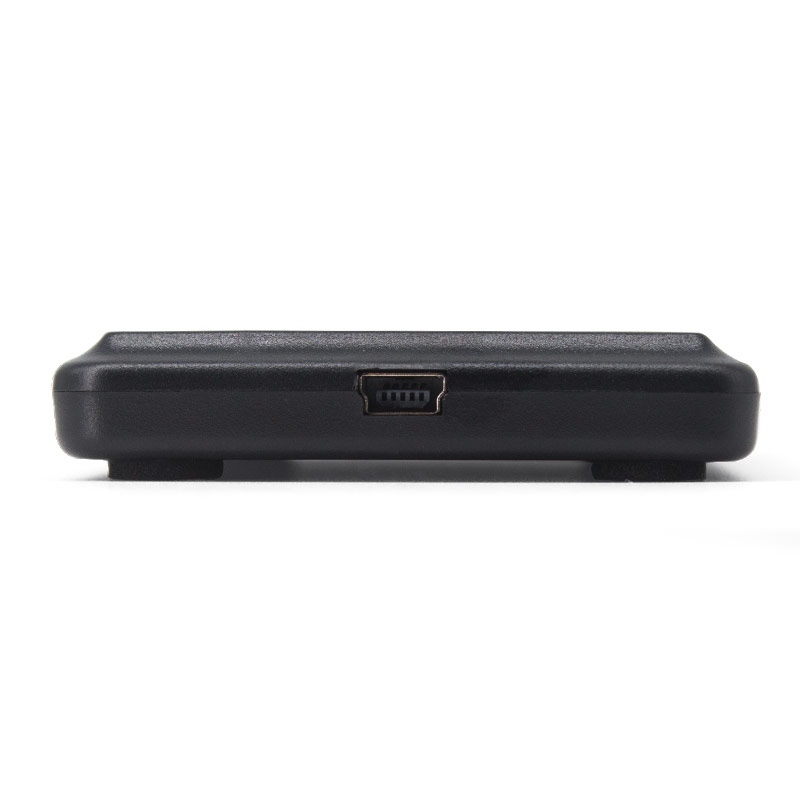
| Interfaces | USB, RS232, RS485, Wiegand 26 |
| Power Supply | 5V DC, 100mA |
| Dimensions | 104 × 68 × 10 mm |
| Installation | Desktop |
| Operating Temperature | -20°C to +70°C |
| Storage Temperature | -25°C to +75°C |
| Compliance | CE / FCC, certificate scope should be confirmed before regulated projects |
A 125khz RFID reader is not automatically compatible with 13.56 MHz NFC, MIFARE, HF, UHF, or 134.2 kHz animal-identification tags.
Low Frequency RFID Reader Typical Applications
- Access Card Enrollment
Used to read 125 kHz access cards or key fobs during user registration, card replacement, or credential testing. - Time Attendance Systems
Used with attendance software when employee RFID credentials need to be read at a desktop workstation or terminal. - Locker and Cabinet Systems
Used in locker, cabinet, vending, or storage systems where a short-range LF credential confirms user identity. - Membership and Visitor Identification
Used by gyms, clubs, campuses, clinics, or service counters that issue 125 kHz cards or key fobs. - RFID Tag Testing
Used by system integrators to check whether a 125 kHz tag, coin tag, or writable credential can be read before deployment.
Which 125kHz Tags Can This Reader Read?
| Tag or Chip Type | Typical Use | Compatibility Note |
| TK4100 | Read-only access cards and key fobs | Common for fixed ID systems |
| EM4200 | Read-only LF identification | Reader output format should match software |
| EM4305 | Programmable LF applications | Requires compatible encoding workflow |
| T5577 | Writable or configurable LF credentials | Reader and data format must be confirmed |
| 134.2 kHz animal tags | Livestock or pet identification | Not supported unless the reader is designed for that frequency and protocol |
Frequency alone is not enough. The reader must support the chip type, modulation, data format, and output mode required by the target system.
Desktop RFID Reader vs Door Access Reader
| Comparison Point | Desktop RFID Reader | Door Access Reader |
| Main Position | Workstation or counter | Door, gate, or wall-mounted access point |
| Main Purpose | Enrollment, testing, local reading | Entry control and permission checking |
| User Interaction | Operator presents tag to reader | User presents credential at entry point |
| Common Interface | USB, RS232, RS485, Wiegand | Wiegand, RS485, TCP/IP, or controller wiring |
| Best Fit | Registration desk, software testing, card issuing | Permanent access-control installation |
Choose a desktop RFID reader when tags need to be read at a PC, service counter, registration desk, or test bench.
Choose a door access reader when the reader must be mounted at an entrance and connected to an access controller.
Typical Application Case: Access Credential Enrollment
An access-control administrator can use a 125kHz desktop RFID reader to enroll staff cards or key fobs into management software.
The operator places the credential near the reader.
The reader outputs the tag ID through the selected interface, such as USB, RS232, RS485, or Wiegand.
The software then links the ID to a user record, permission group, or access profile.
Before deployment, sample credentials should be tested with the reader, software, output format, and controller workflow.
Need a Desktop RFID Reader That Matches Your 125kHz Tags?
Send one working tag sample, the required output interface, and the software or controller format before production.
JIA RFID can check whether the reader output matches your tag chip, data format, and system connection.
Sample testing is recommended when replacing an existing reader or integrating with current software.
Frequently Asked Question
The top questions about low frequency RFID reader
A low frequency RFID reader is a reader designed for short-range identification with compatible LF RFID tags, cards, or key fobs.
No. NFC normally operates at 13.56 MHz. A 125khz RFID reader is designed for LF RFID credentials and cannot read NFC tags unless a separate NFC reader is used.
Only if the animal tag frequency and protocol are supported. Many animal-identification systems use 134.2 kHz ISO 11784/11785 tags, so compatibility must be confirmed before use.
Read range depends on tag chip, tag antenna size, reader output, tag orientation, surrounding materials, electrical noise, and software response time.
Related Products
Customize any types RFID tags from our factory to meet your own requirements.