
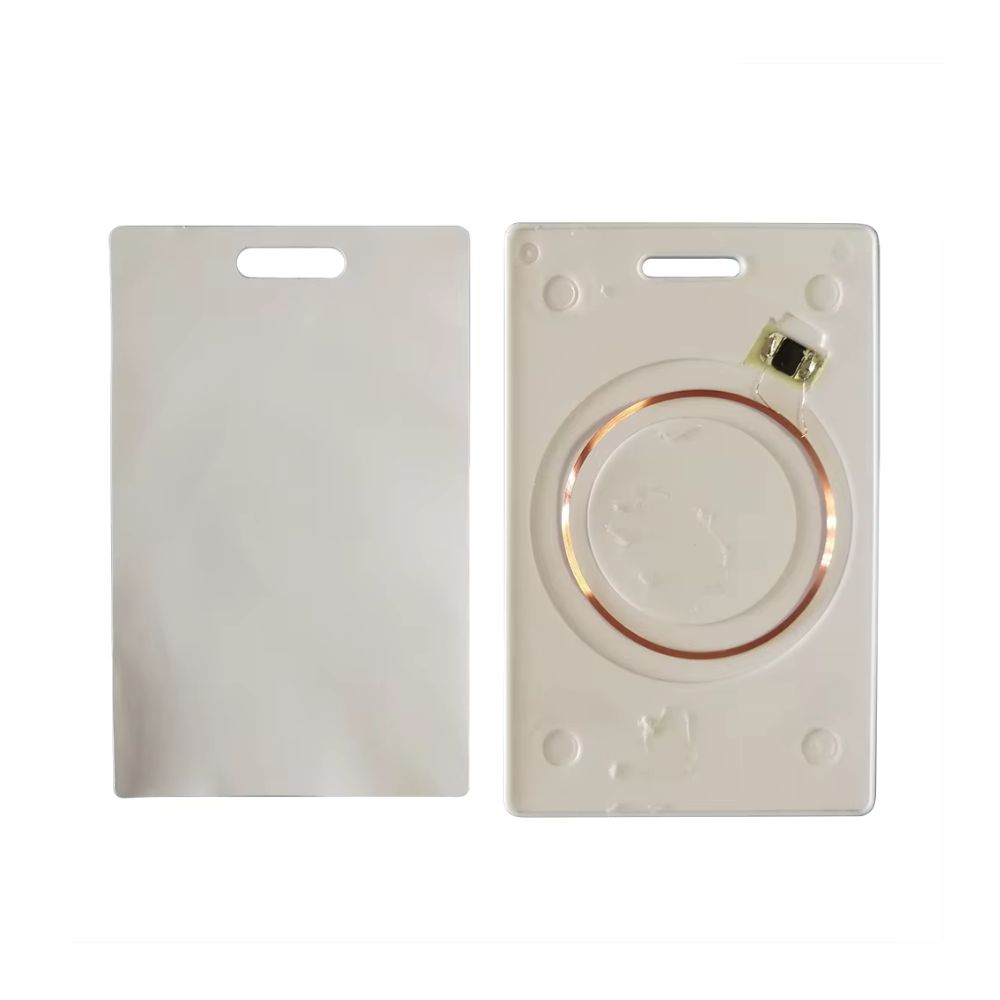

125KHz Clamshell Pre-programmed Proximity Card Employee Card
Clamshell Access Control Proximity Cards
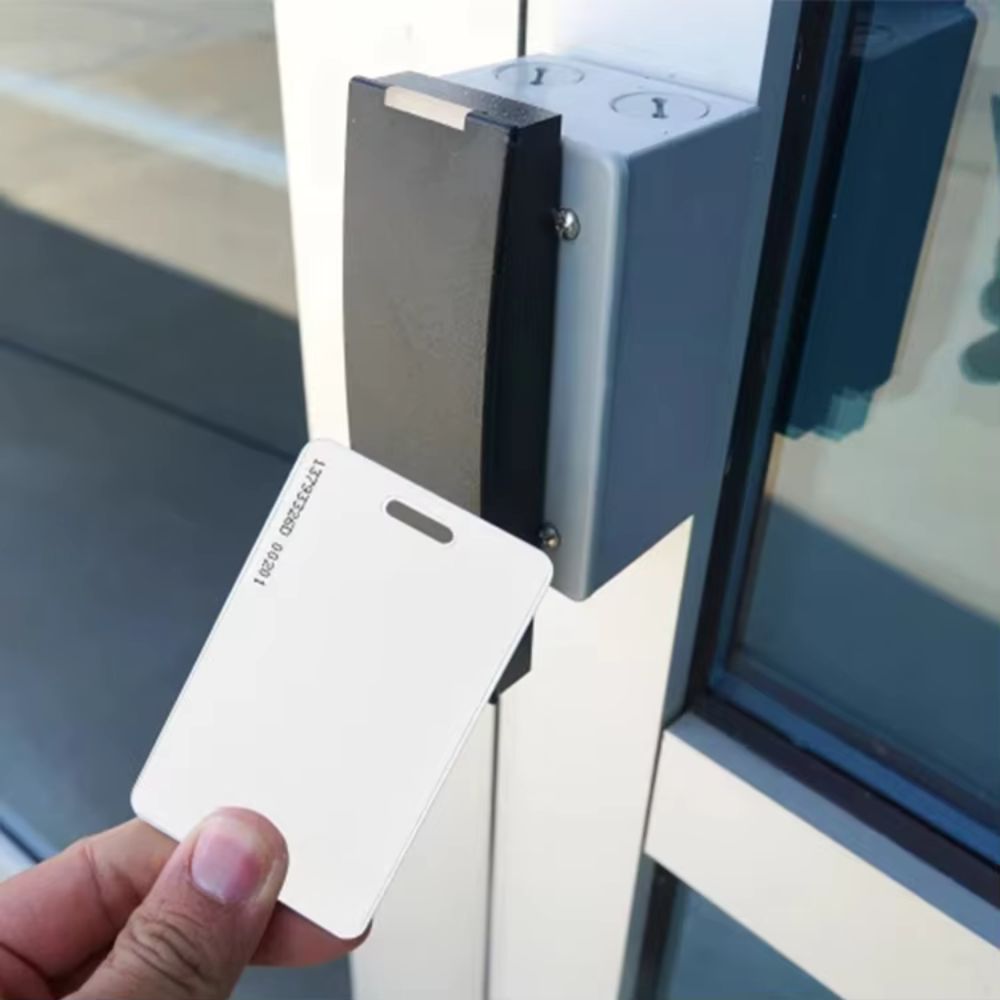
A proximity card is a contactless RFID credential that sends a unique ID to a nearby reader for access control, identification, parking, or time attendance.
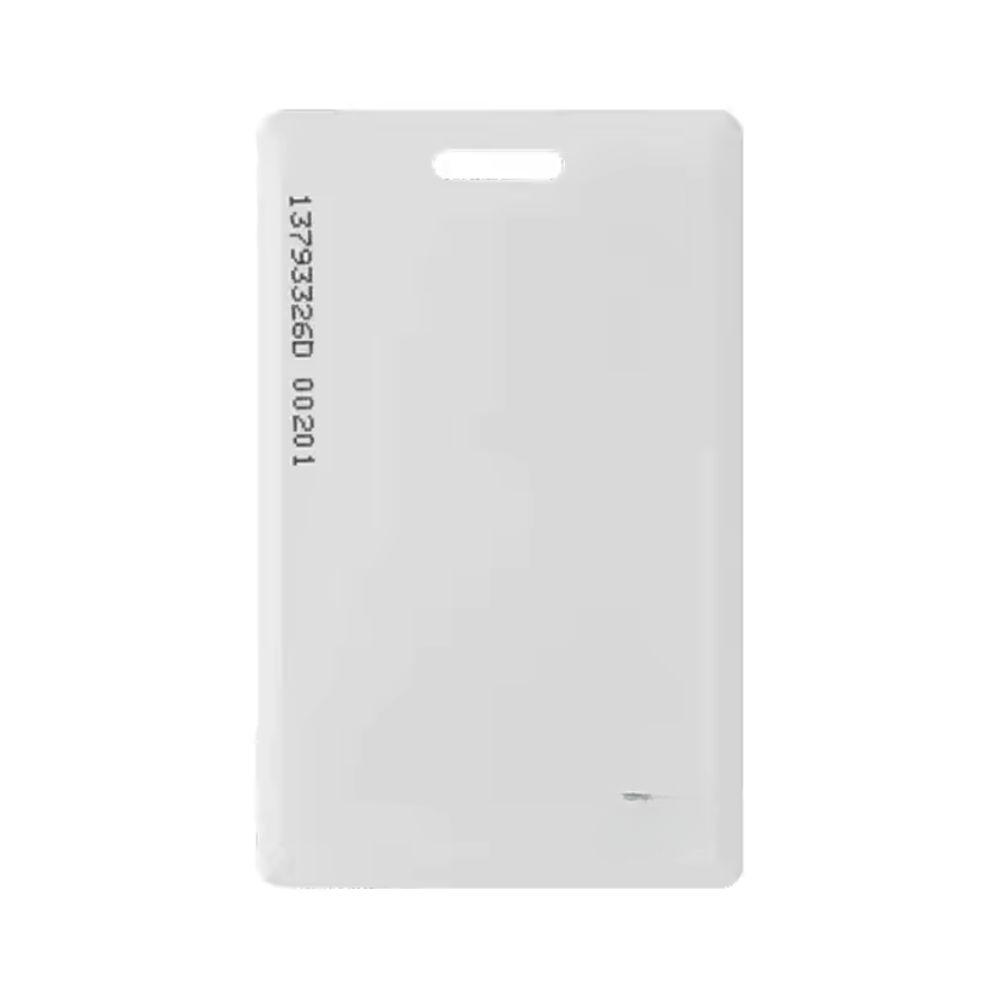
These access control proximity cards use 125 kHz low-frequency RFID technology and are supplied in a rigid ABS clamshell format. The card is factory encoded and intended for systems that require durable, short-range RFID credentials.
This product is suitable for HID proximity cards, ProxCard II-style readers, and similar 125 kHz access control systems. Compatibility should be checked before ordering, especially when replacing cards in an existing facility.
Key Features
- 125 kHz Proximity Card Technology
The card uses low-frequency RFID for short-range access control reading. Typical read range is 4–10 cm, depending on the reader model, card orientation, and installation environment. - Clamshell Card Structure
The rigid ABS clamshell housing is thicker and more durable than many thin PVC cards. It is suitable for access systems where cards are handled frequently. - Pre-Programmed Access Credential
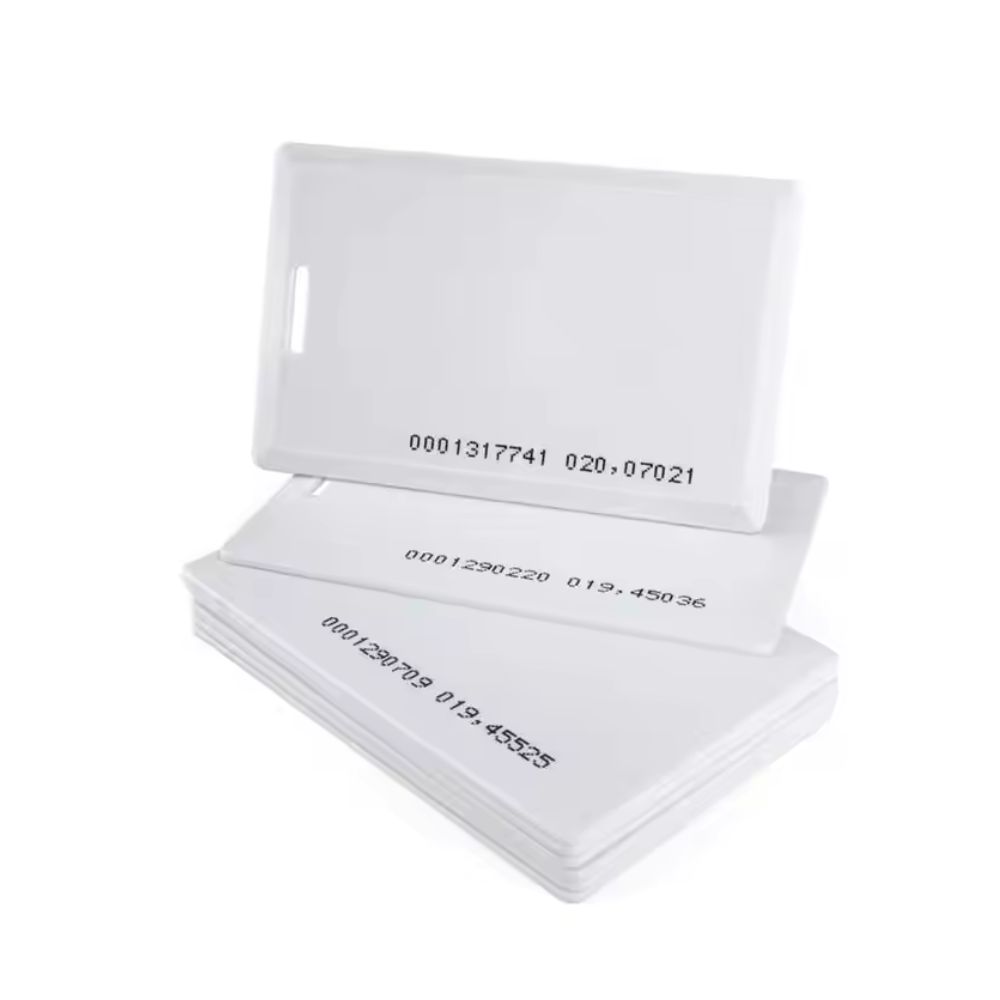
Each card is factory encoded with a fixed ID. It can be supplied in standard 26-bit format or customized to match supported access control systems. - HID-Compatible Reader Support
These cards are designed for HID Prox, ProxCard II-style readers, and similar 125 kHz reader systems. Testing is recommended before bulk replacement or mixed-system deployment. - Durable Card for Daily Access Use
The clamshell structure supports repeated handling in offices, schools, factories, parking systems, gated communities, and facility access environments.
Technical Specifications
| Feature | Specification |
| Product Type | Clamshell proximity card |
| Main Application | Access control proximity cards for employee ID, visitor access, parking, and time attendance |
| Frequency | 125 kHz low-frequency RFID |
| Card Type | Rigid clamshell RFID card |
| Material | ABS plastic |
| Compatibility | HID Prox, ProxCard II-style readers, and similar 125 kHz systems |
| Read Range | Approx. 4–10 cm, depending on reader and environment |
| Encoding | Factory encoded |
| Rewritable | No |
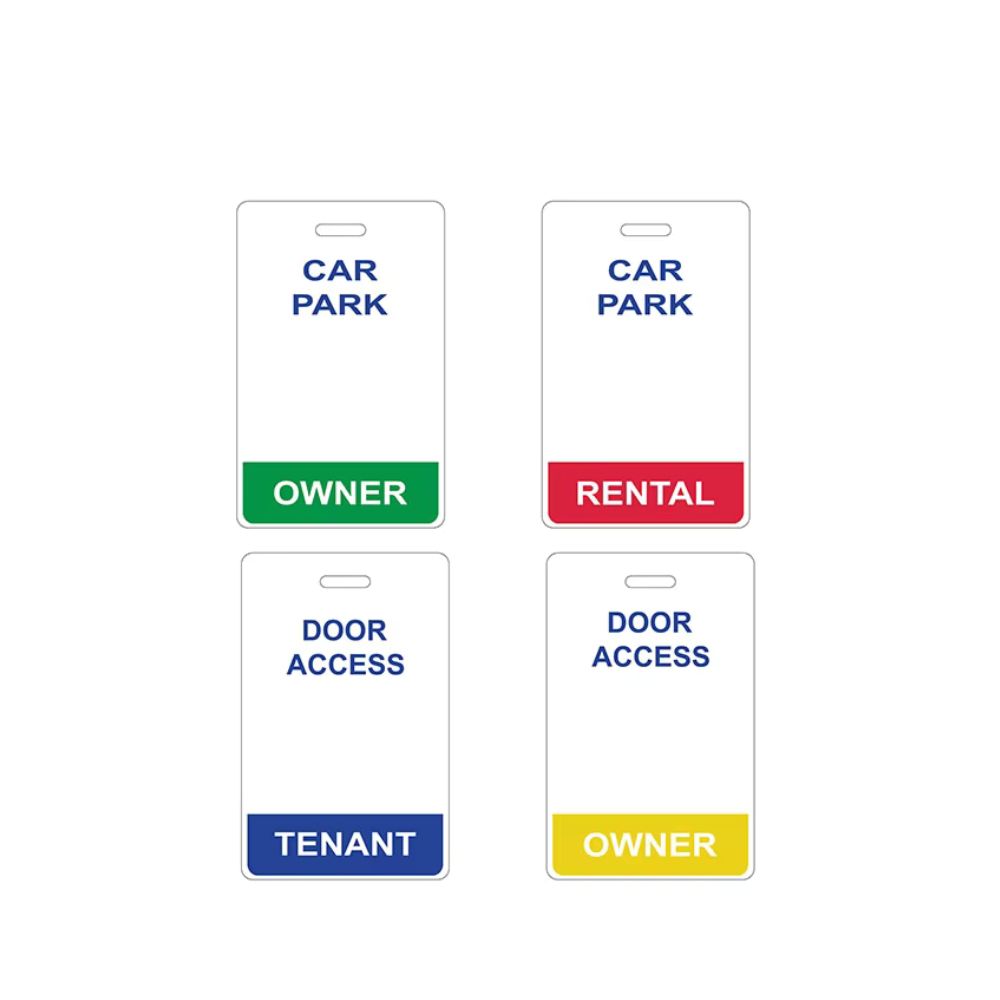
| Printing | Not printable on standard clamshell surface |
| Format Options | 26-bit standard, custom facility code, sequential numbering |
| Customization Options | Facility code, card number range, pre-programming, numbering, packaging |
| MOQ | 500 pcs |
Typical Applications
- Employee Building Access
Organizations use proximity cards to control staff entry into offices, factories, warehouses, laboratories, and restricted work areas. - Visitor and Contractor Management
Temporary or assigned cards can be used for visitors, contractors, and service personnel who need controlled access during a defined period. - Parking Lot Access
A clamshell proximity card can be used with compatible gate readers for parking entry, staff parking areas, and residential vehicle access points. - Time Attendance Systems
The same card ID can be used in supported attendance terminals to record employee check-in and check-out events. - School and Facility Control
Schools, government buildings, and shared facilities can use access control proximity cards to manage entry permissions by user group, department, or access zone
Smart Card vs Proximity Card
A proximity card usually sends a fixed ID to a reader for access control. Many 125 kHz proximity cards are simple, durable, and cost-effective for door entry systems.
A smart card usually provides more memory or security functions. It may support encrypted communication, stored data, or multiple applications.
For basic access control, a proximity card is often sufficient. For encrypted access, payment functions, advanced identity management, or multi-application credentials, a smart card may be more suitable.
Application Case: Employee Access Card Replacement
A company needed replacement credentials for an existing office access control system using 125 kHz readers.
The company selected clamshell access control proximity cards because the cards were durable, pre-programmed, and compatible with the installed reader type. A small batch was tested on the building entrance reader, office door reader, and attendance terminal before full distribution.
The test confirmed read performance, card format recognition, and employee record assignment in the access control software
Need Proximity Cards for Access Control Systems?
For accurate card matching, provide the reader model, frequency, card format, facility code, card number range, and order quantity.
JIA RFID can supply customized proximity cards, access control proximity cards, and 125 kHz proximity cards for employee access, visitor management, parking control, time attendance, and facility security systems.
Frequently Asked Question
The top questions about Proximity Card.
A proximity card is a contactless RFID card that sends a unique ID to a compatible reader for access control or identification.
The term proximity card means the card can be read when it is placed near a reader, without physical contact or swiping.
125 kHz proximity cards are low-frequency RFID cards commonly used in door access, gate entry, attendance systems, and facility access control.
These cards are designed for HID Prox, ProxCard II-style readers, and similar 125 kHz systems. Final compatibility depends on the reader and card format.
The typical read range is 4–10 cm, depending on the reader, card orientation, and installation environment
No. These cards are factory encoded and are not designed for user rewriting.
Yes. Facility code and sequential card numbers can be customized when the required format is supported by the access control system.
Standard clamshell proximity cards are generally not suitable for direct surface printing. For printed employee ID cards, a printable PVC proximity card may be a better option.
A proximity card usually sends a fixed ID for access control. A smart card may support encryption, more memory, and multiple applications.
The MOQ is 500 pcs.
Recommended details include reader model, frequency, card format, facility code, card number range, quantity, and whether the cards must match an existing access control system.
Related Products
Customize any types RFID tags from our factory to meet your own requirements.