
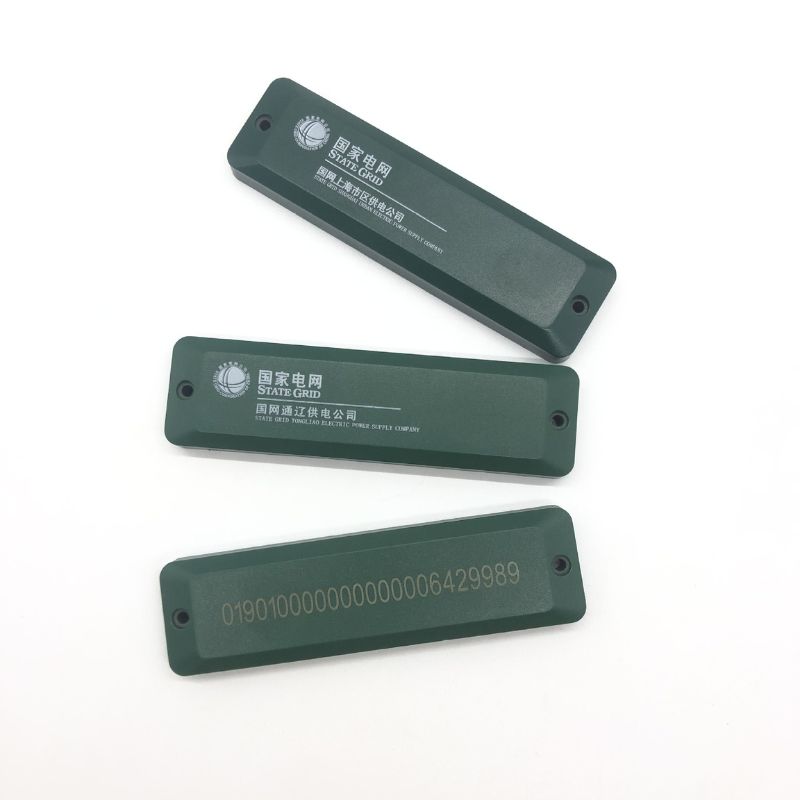

Long Range UHF Metal Mount RFID Tags for Logistics
High-Performance UHF Metal Mount RFID Tags for Industrial Applications
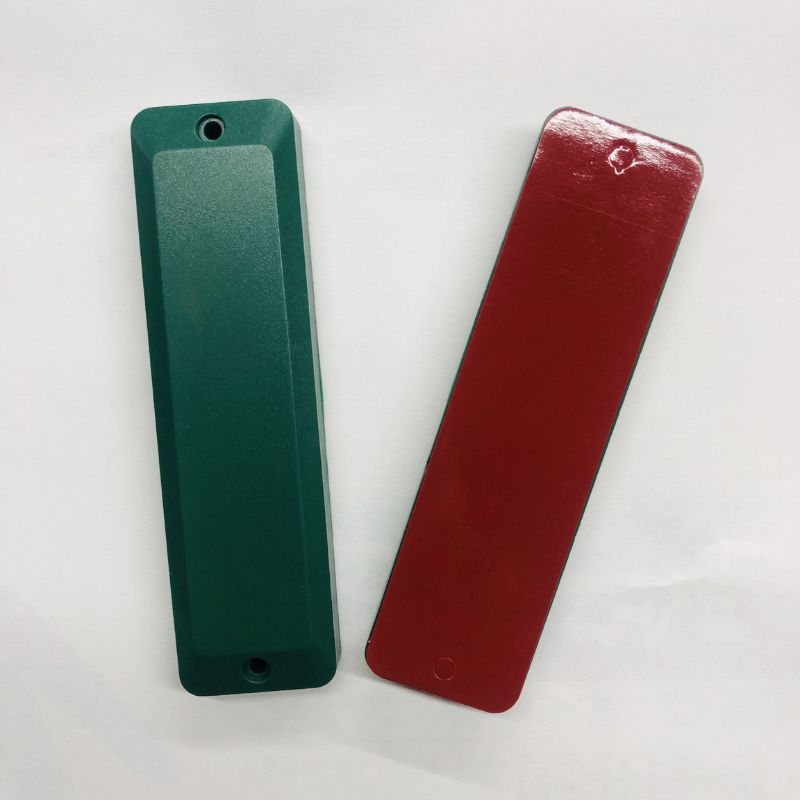
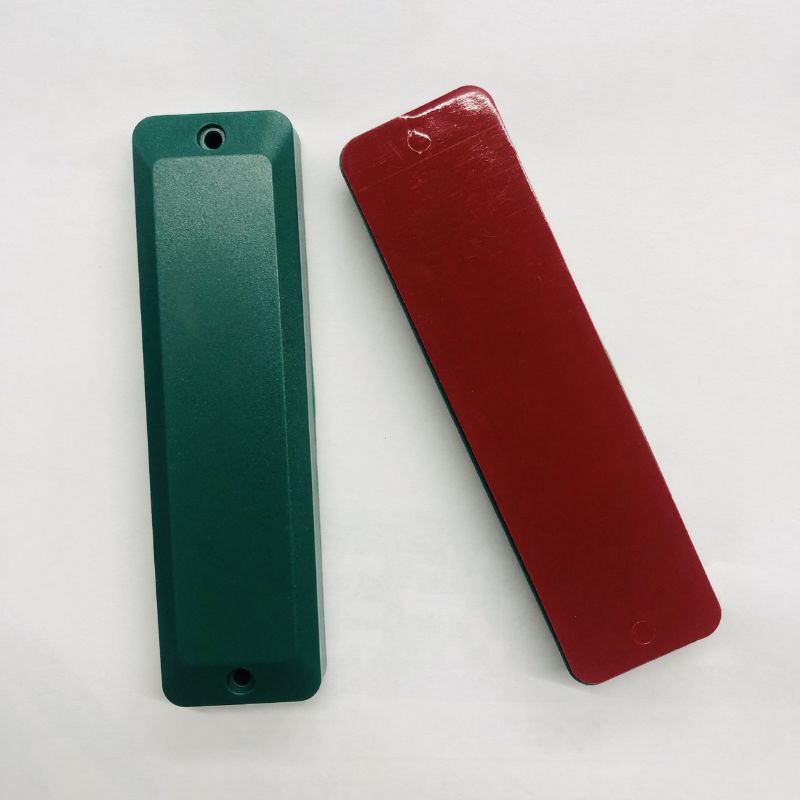
Our Long Range UHF Metal Mount RFID Tags, are engineered to provide unparalleled performance when attached to metal objects in logistics and other industrial applications. These specialized RFID tags are designed to excel where traditional RFID tags fall short, offering reliable and accurate tracking of metal assets such as computers, IT equipment, tools, machinery, and returnable containers. The metal-mount design includes an offset from the surface of the tagged item, ensuring that the tags function optimally despite the challenges posed by metal surfaces.
Designed for Reliable Asset Tracking and Versatile Industrial Applications
Our Metal Mount RFID Tags are an essential tool for industries that rely on precise asset tracking and inventory management. Unlike standard RFID tags, which often suffer from interference when placed on metal, these tags are specifically tuned to overcome such obstacles. Available in various form factors and encapsulated for durability, they are suitable for a wide range of applications, including manufacturing, logistics, and heavy industry. The customization options available make them versatile for different operational needs.
Durable and High-Performance Metal Mount RFID Tags for Challenging Environments
The RFID Metal Mount RFID Tags we offer are crafted with durability and performance in mind. Designed to withstand outdoor and harsh industrial environments, these tags ensure long-range readability and high accuracy, even in challenging conditions. They are particularly effective for metallic asset tracking, whether in oil and gas, mining, or warehouse management. Their robust construction and reliable performance make them an ideal choice for any industry where metal asset management is critical.
To explore more about the diverse uses of RFID technology, visit our guide on Comprehensive Applications of RFID Tags.
Improve Logistics Efficiency through Seamless Integration and Accurate Asset Tracking
Incorporating our Long Range UHF Metal Mount RFID Tags into your logistics operations streamlines asset tracking, enhances inventory accuracy, and ensures seamless integration with existing systems. These tags are not only a solution to the traditional challenges of metal interference but also an upgrade to your current asset management processes, providing the reliability and longevity required in demanding environments.
Metal Mount RFID Tags Technical Specification:
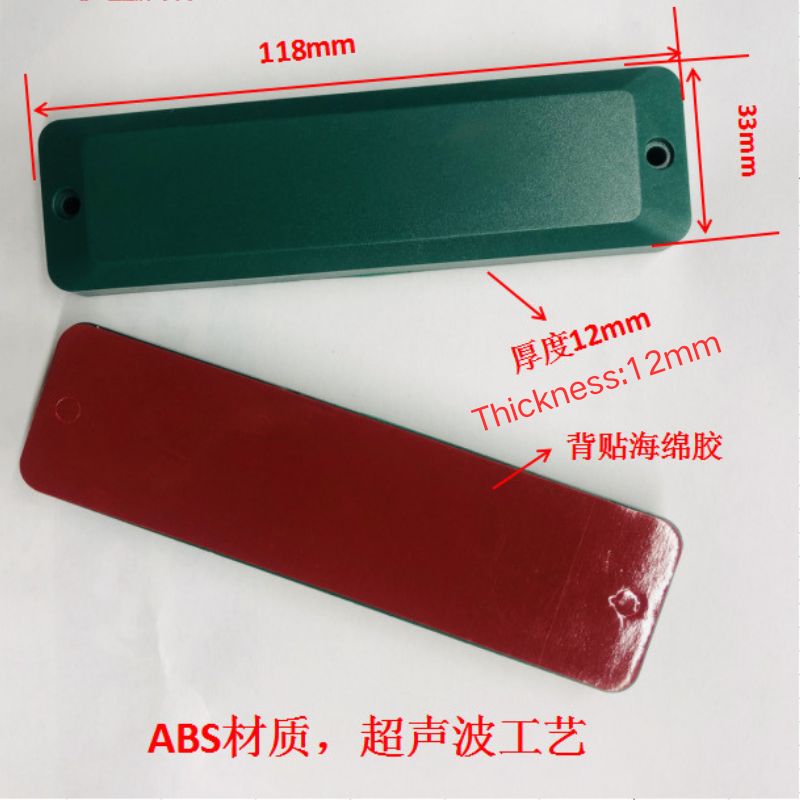
Material: ABS
Chip: R6A
Size: 118*33mm
Thickness: 12.2mm,
Color: White, Green.
Frequency: 860~960MHz
Protocol: ISO18000-6C
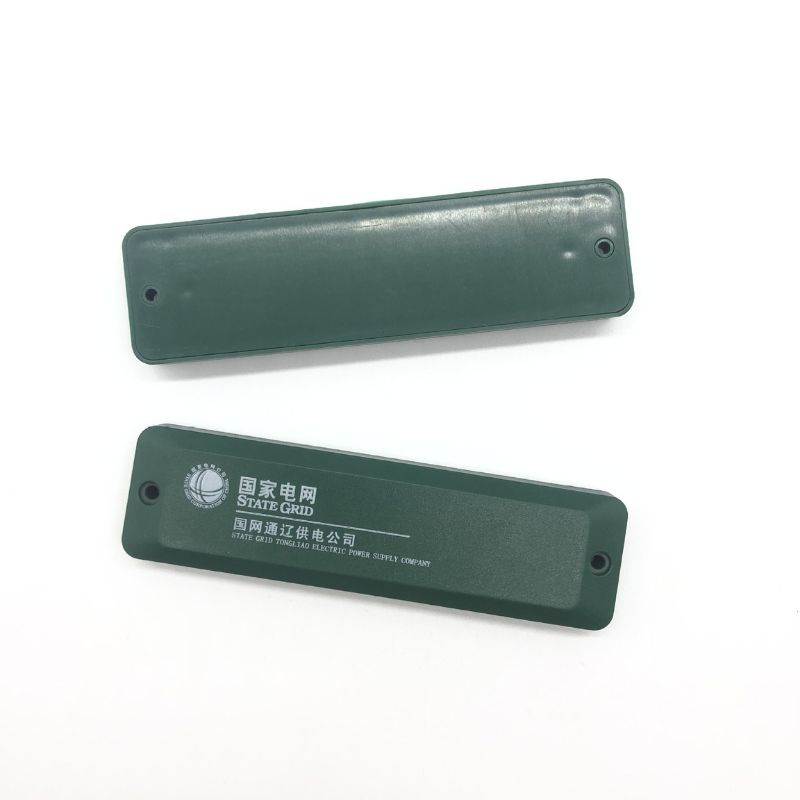
Customized: Logo printing, Serial number, and Barcode
Frequently Asked Question
The top questions about Metal Mount RFID Tags.
RFID stands for Radio-Frequency Identification, a technology used for identifying people, animals, or objects using radio-frequency communication. This identification is facilitated by RFID tags, or transponders, each equipped with a unique identification number and, in some cases, additional memory.
Passive RFID tags are particularly cost-effective, priced at around €0.05, and do not require an external power source. This affordability and ease of use make them ideal for a wide array of applications, including logistics, inventory management, supply chain operations, automation, marketing, and many other fields.
An RFID tag is a chip or transponder equipped with an antenna that amplifies radio signals. Typically, an RFID tag resembles a label with a visible circuit. When adhesive, it is known as a “wet inlay,” and when non-adhesive, it is called a “dry inlay.”
Active Tags
Active tags come with an internal battery, which is typically used to boost transmission power and extend the reading distance. A common example of active tags is the Bluetooth Beacon.
Passive Tags
Passive tags lack an internal power source and instead use a capacitor. Once charged, this capacitor generates an electromagnetic field that transmits the information stored in the chip. An RFID reader powers and reads the tag in a fraction of a second. Passive tags are the most common type because they do not require a battery.
For a complete overview, there are also semi-active tags. These tags have a power supply that is not used for radio circuits but rather for additional features such as temperature or motion sensors.
RFID tags are read or detected using specialized fixed or mobile devices known as RFID readers. These readers activate the transponder through induction or electromagnetism, prompting it to transmit the stored information. RFID readers can come with either an integrated or an external antenna. Some models allow multiple antennas to be connected to a single reader, enabling the identification of tags at various locations or providing precise coverage of a specific area.
RFID technology operates at various frequencies, each with unique characteristics and governed by ISO standards. Here are the most common RFID frequency categories:
125/134 kHz – RFID LF (Low Frequencies): Governed by the ISO 18000-2 standard, these low-frequency tags have a reading distance of a few centimeters and a low data transmission speed. They are primarily used for animal identification, vending machines, burglar alarms, and access control.
13.56 MHz – RFID HF (High Frequencies): Governed by the ISO 18000-3 standard, these high-frequency tags have a reading distance of up to 10 centimeters and a low to medium data transmission speed. This frequency is also known as NFC (Near Field Communication) and is increasingly popular because many smartphones can act as readers, enabling various innovative applications.
860-960 MHz – RFID UHF (Ultra High Frequencies): Governed by the ISO 18000-6 standard, UHF tags have a reading distance of several meters, even with passive tags. There are variations between UHF readers using US and European standards, but the RAIN standard ensures compatibility with both. UHF tags are widely used for logistics, inventory management, timekeeping, and access control.
5.8 GHz – RFID SHF (Super High Frequencies): Governed by the ISO 18000-5 standard, this is the highest RFID frequency range. It includes only active tags with internal batteries, allowing detection distances of hundreds of meters. A common example of SHF tags is those used for electronic toll collection (ETC).
Low-frequency (LF) readers are typically designed to read one tag at a time, such as the ID of a single livestock ear tag. In contrast, high-frequency (HF) and especially ultra-high frequency (UHF) readers are capable of reading multiple RFID tags simultaneously. This allows them to efficiently scan a stack of tagged books or a pallet of goods as they pass through a reader gate.
The most affordable RFID tags can cost just a few cents and are typically designed as adhesive labels. These low-cost tags are often used in retail or logistics for single-use applications in non-durable settings. The price of RFID tags can vary based on factors such as the chip’s capabilities, memory size, and durability against conditions like heat, impact, freezing, sunlight, and chemicals. Costs can range up to several dollars depending on these factors. Additionally, active tags, which include a battery, are generally more expensive than passive tags.
Related Products
Customize any types RFID tags from our factory to meet your own requirements.