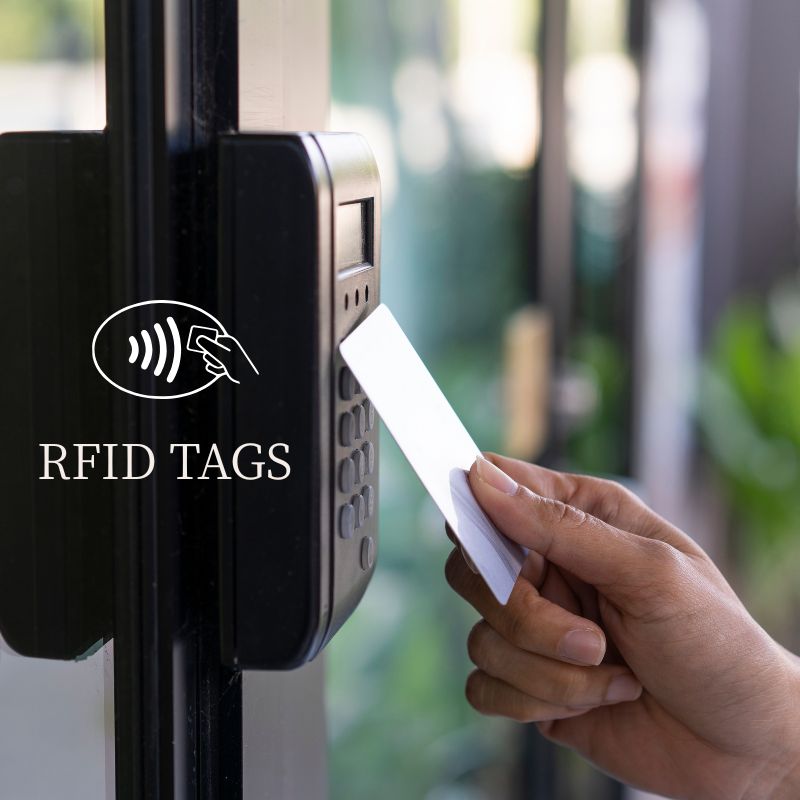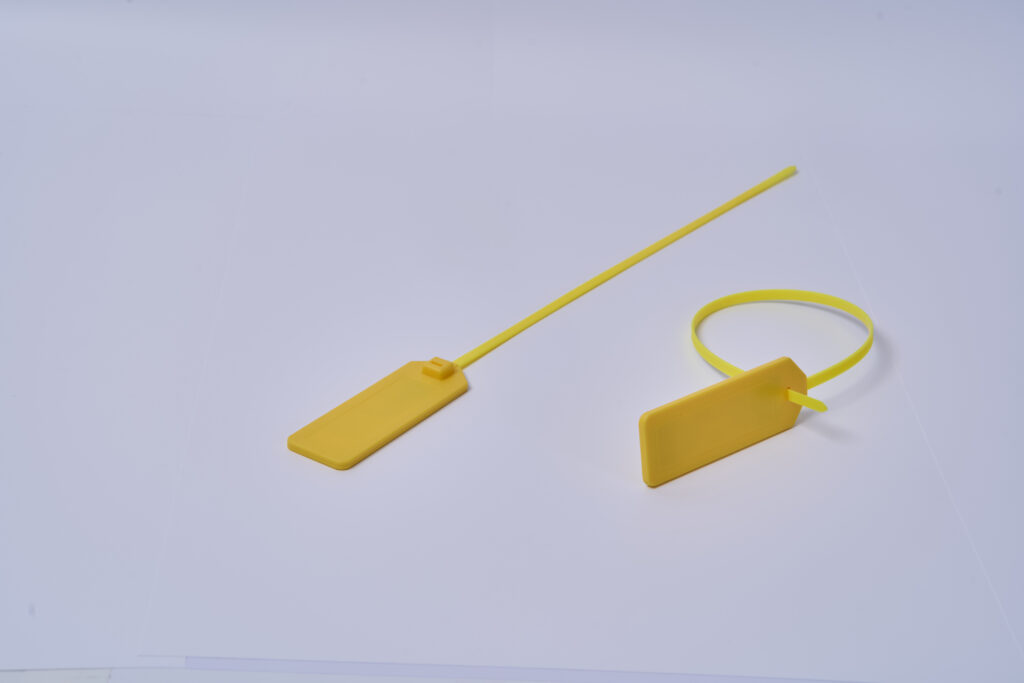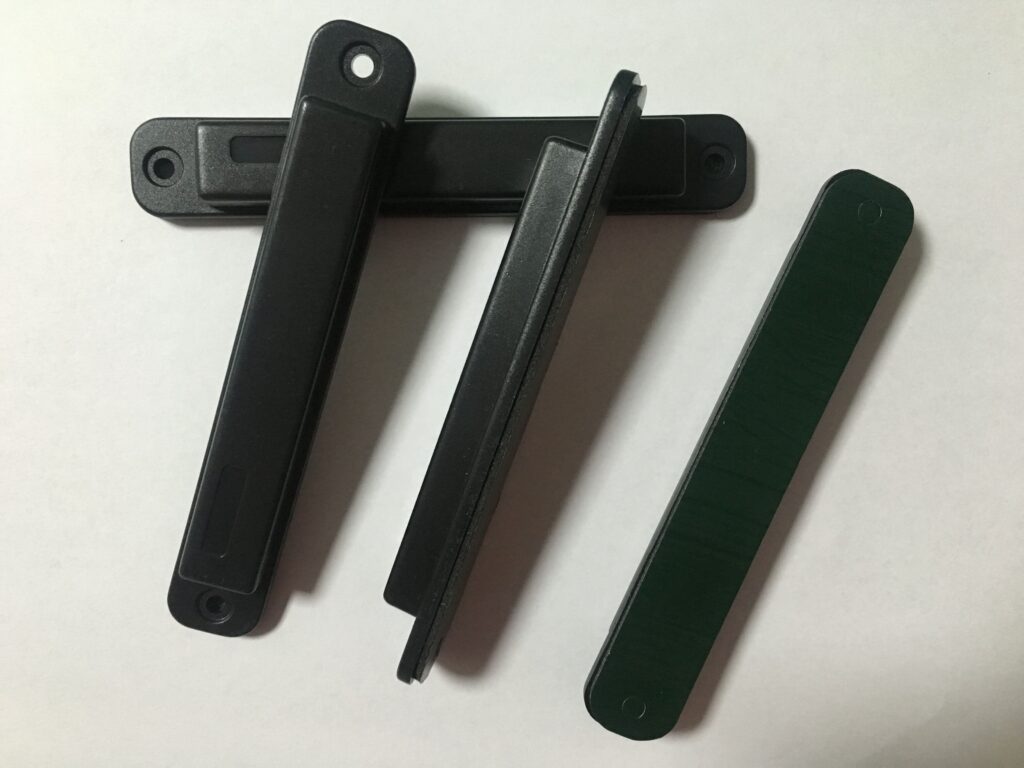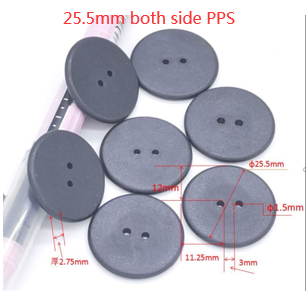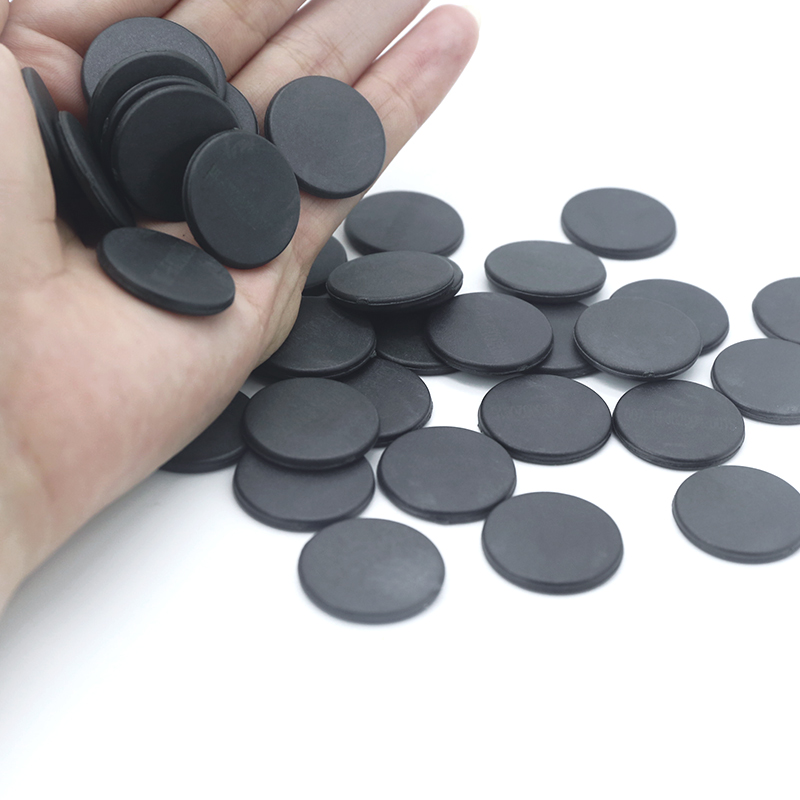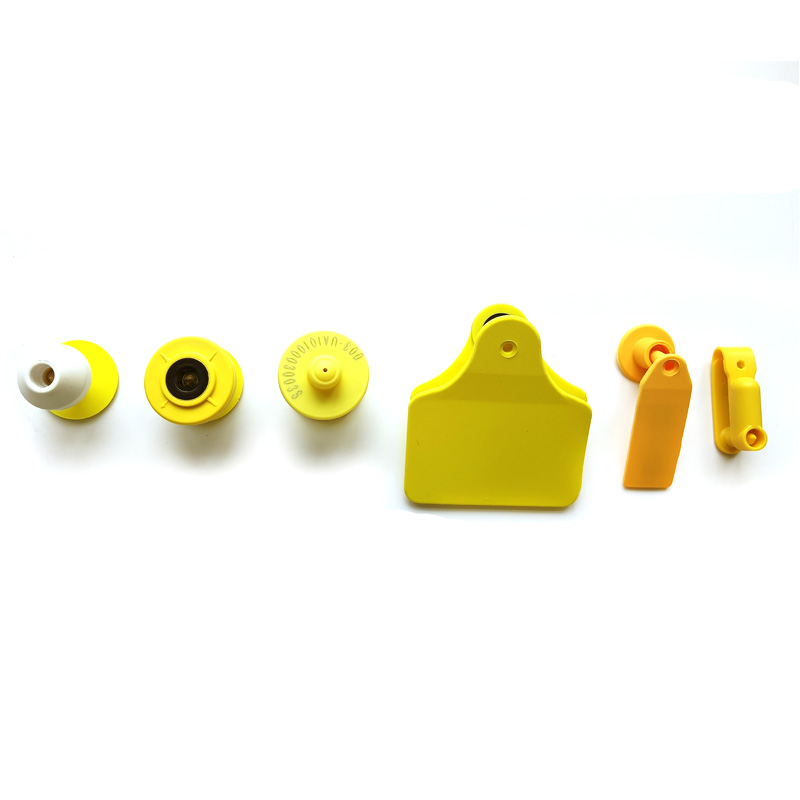
RFID technology is used in many everyday systems, from inventory tracking and access control to livestock identification and asset management. At the center of all these systems is the RFID reader because it determines how tags are detected and how data moves into the rest of the system.
What Is an RFID Reader?

An RFID reader is the electronic device in an RFID system that generates the radio signal needed to communicate with an RFID tag, receives the tag’s response, and converts that response into usable data.
It operates at a specific RFID frequency (such as LF, HF, or UHF), uses a matching communication protocol, and works with an antenna to create the read zone where tags can be detected. Depending on the system design, the antenna may be built into the reader or connected as a separate component.
How Does an RFID Reader Work?
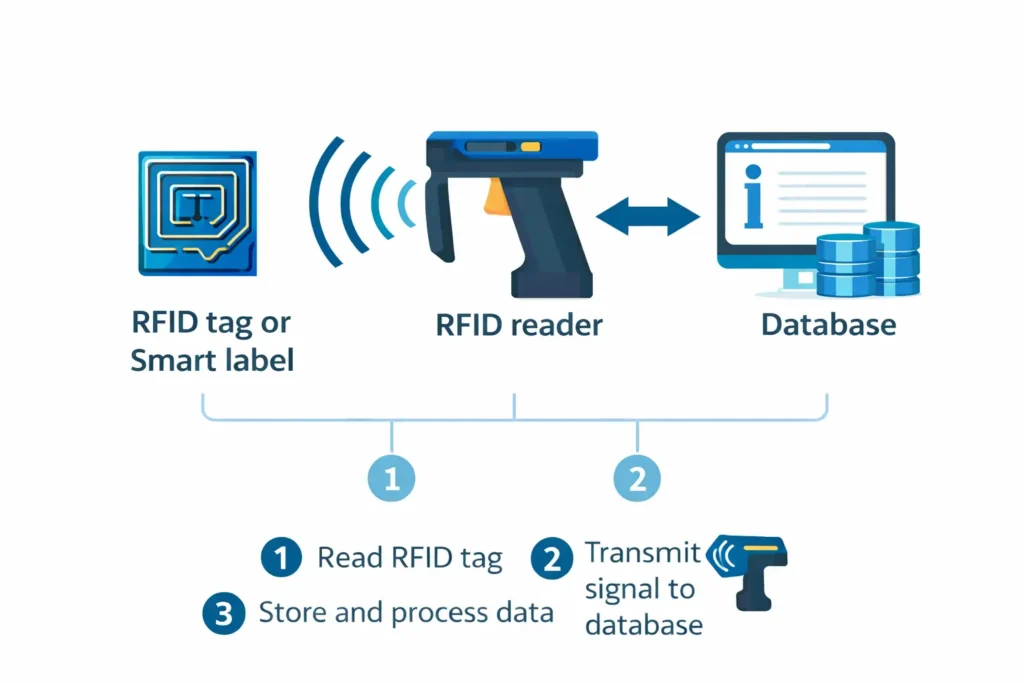
An RFID reader works by generating a radio frequency signal through its antenna and using that signal to communicate with a compatible RFID tag. This signal creates the read zone where tag detection becomes possible.
When a tag enters that read zone, the reader handles the communication process. It sends the interrogation signal, detects the tag’s response, receives the returned signal, and processes that signal into usable data. This processing includes tasks such as signal detection, decoding, and protocol handling, so the tag response can be converted into digital information that software can recognize.
How the reader does this depends on the RFID technology being used. In passive RFID, the reader’s signal provides the energy that allows the tag chip to respond. In active RFID, the reader communicates with a battery-powered tag that can transmit using its own power. The communication method also changes by frequency. LF and HF readers use inductive coupling, while UHF readers use electromagnetic backscatter. These differences affect how the reader energizes the tag, receives the response, and performs under different conditions.
Types of RFID Readers
RFID readers are usually grouped by how they are used and where they are installed. The three most common types are handheld readers, fixed readers, and mobile or desktop readers.
Handheld RFID Readers
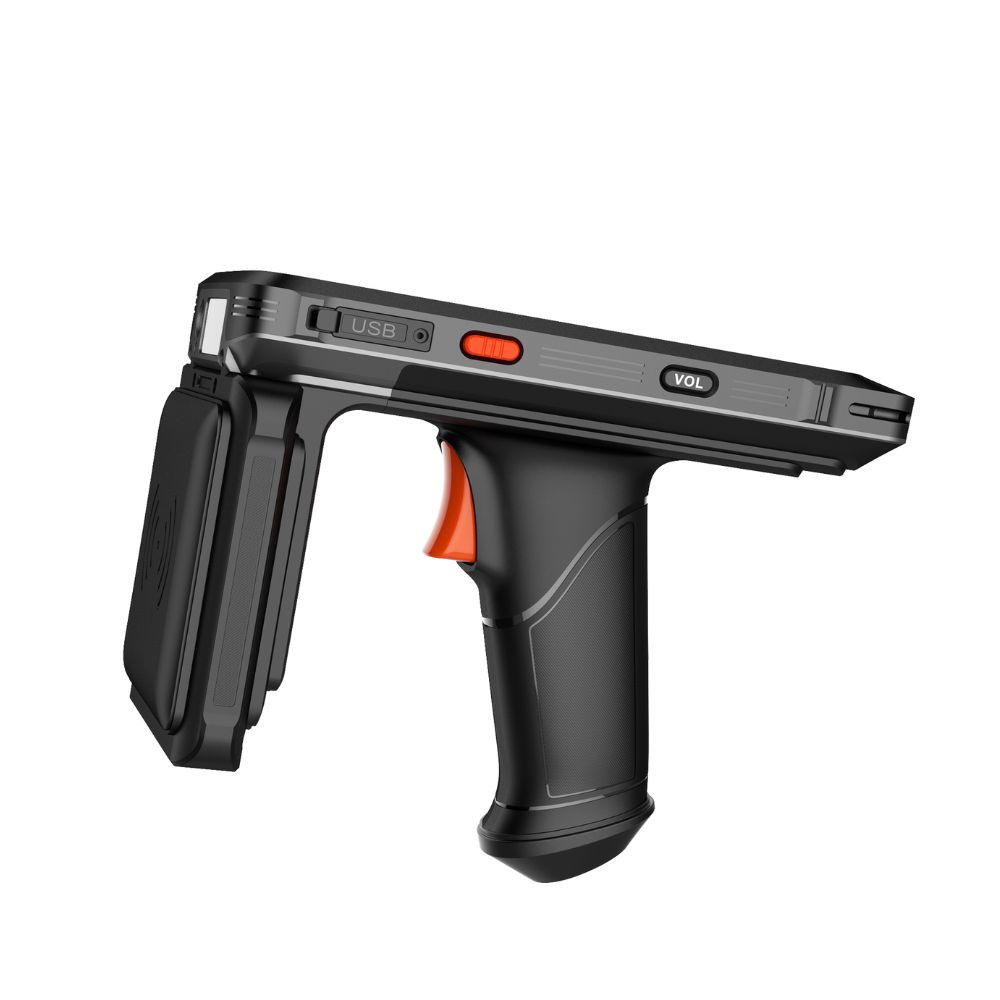
Handheld RFID readers are portable devices that let the user move around and scan tags manually. They are commonly used in warehouses, retail stores, livestock management, field inspections, and asset tracking because they make it easy to read tags one by one or in small groups without installing a permanent system.
Many handheld readers include a built-in screen, keypad, battery, and wireless connection. Some run their own operating system, while others pair with a phone or tablet. They are often chosen when flexibility matters more than full automation.
Fixed RFID Readers
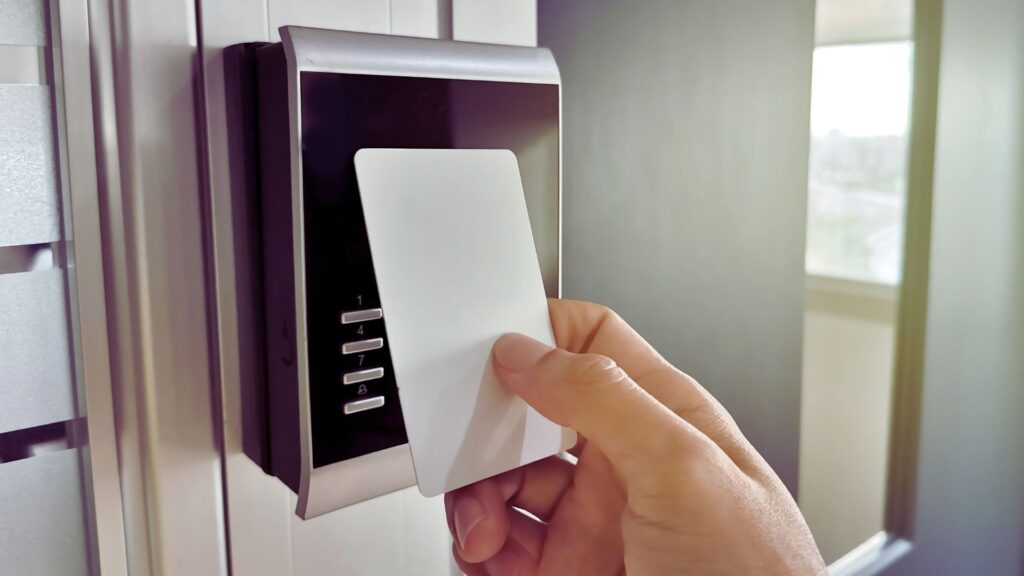
Fixed RFID readers are installed in one location and read tags automatically as tagged items, animals, or assets move through the read area. They are often used at warehouse doors, conveyor lines, production stations, vehicle gates, access points, and other controlled checkpoints.
These readers are usually connected to one or more external antennas so the read zone can be shaped for the application. Fixed readers are a better fit when the goal is continuous monitoring, automatic data capture, or high-volume tag reading without manual scanning.
Mobile and Desktop RFID Readers
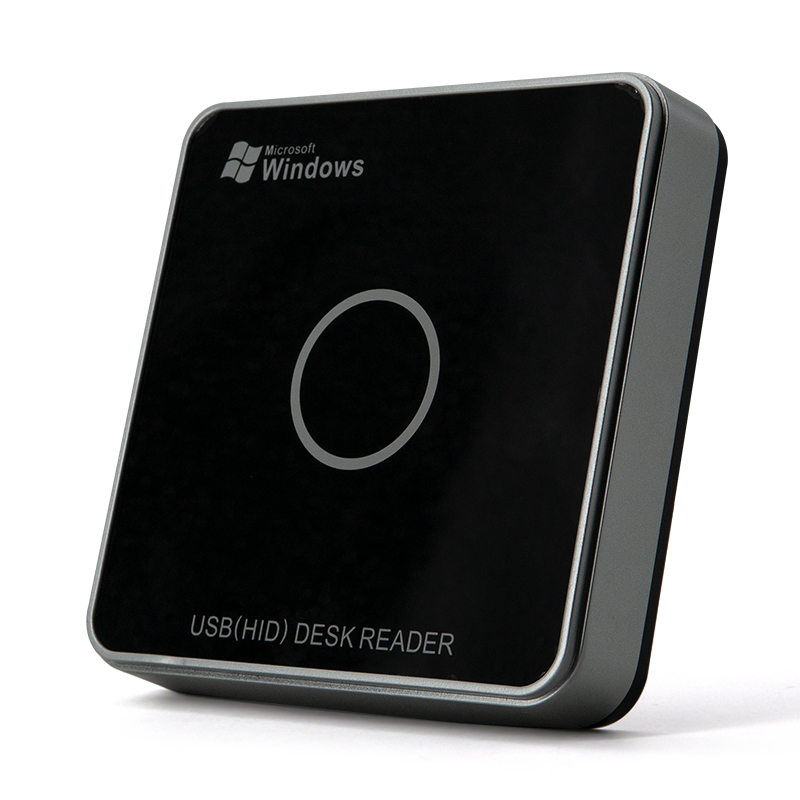
Mobile and desktop RFID readers are smaller units designed for close-range or workstation use. Mobile readers often connect to smartphones or tablets through Bluetooth or a physical connector, while desktop readers are usually placed on a desk, counter, or registration station and connect directly to a computer or local system.
They are often used for card enrollment, ID verification, document tracking, sample tracking, small item management, and other tasks where tags are read at short distance in a controlled setting. Compared with handheld and fixed readers, they are usually more compact and application-specific.
How to Choose the Right RFID Reader
Choosing an RFID reader is mainly about system fit. The reader has to match the tag technology, the reading task, and the real working environment. A reader that performs well in one setup can fail in another. Below are the main factors to consider when choosing one.
RFID Frequency
RFID frequency decides which tags the reader can communicate with, how the signal behaves, and what kind of reading performance is realistic. A reader must match both the frequency and the protocol used by the tag.
LF readers are used for low frequency tags, typically in short-range systems where stable reading matters more than speed or long distance. Animal identification is a common example. LF performs relatively well around moisture and dirty field conditions, but the read distance is short and reading speed is lower.
HF readers work at 13.56 MHz and are often used for smart cards, ticketing, library systems, and NFC-related applications. They are built for close-range reading and are a better fit when the tag needs to be presented intentionally near the reader. HF is often chosen when controlled reading distance is more important than wide-area capture.
UHF readers are used when longer read distance, faster reading, or multi-tag reading is needed. They are common in warehousing, retail, logistics, and asset tracking. UHF can read many tags quickly, but it is also more sensitive to environmental factors such as metal, liquid, and tag orientation.
Application
Application determines what kind of reader you actually need, not just what kind of tag you have. Two systems can use the same frequency and still need very different reader designs.
Livestock identification usually needs a handheld reader that is easy to carry, quick to trigger, and strong enough for outdoor work. In this case, drop resistance, battery life, grip, screen visibility, and reading reliability matter more than advanced portal functions.
A warehouse operation may need a fixed reader with external antennas at a dock door, or a handheld UHF reader for cycle counts and picking. Here, fast multi-tag reading, antenna coverage, software integration, and stable performance around moving cartons matter more than compact size.
A desktop card enrollment station may use an HF reader that only needs short-range, one-at-a-time reading in a clean indoor setting. In that case, controlled read distance, USB connection, and software compatibility matter more than rugged housing.
Read Range
Read range should be controlled, not simply maximized. A reader that can read farther is not automatically the better choice.
Some applications need very short read range so only one tag is captured at a time. Card issuance, access control, and desktop registration are good examples. In these cases, too much range can create false reads or poor control.
Other applications need wider or longer coverage. A UHF gate reader may need to capture tagged items moving through a doorway. A livestock reader may need enough distance to scan safely and quickly without awkward positioning. A stock-counting reader may need a practical range that lets staff scan shelves efficiently without touching every item.
Advertised maximum range is often measured under ideal test conditions. Real range depends on the reader, tag, antenna, orientation, and surrounding materials. For example, our Jia 134.2 kHz animal RFID reader can reach up to 50 cm when used with our matching 134.2 kHz RFID ear tags.
Environment
RFID readers should also be chosen for the environment they will work in.
Metal and liquid can strongly affect read performance, especially in UHF systems. If tags are attached to metal tools, liquid containers, animal bodies, or densely packed products, the reader and antenna setup may need to be more carefully matched. A reader that works well in dry carton handling may perform very differently in a wet processing area or near steel structures.
Physical conditions also matter. Outdoor use may require weather resistance, sealed connectors, and a housing that can handle mud, dust, rain, and temperature changes. Industrial sites may need vibration resistance, stronger cable protection, and mounting stability. Farm use may demand a reader that can tolerate repeated handling, dirt, and uneven operating conditions.
Movement matters too. A stationary tag on a desk is easy to read. A fast-moving tag passing a portal at an angle is harder. If tags will not always face the antenna in the same direction, the reader and antenna setup need to be chosen with that in mind.
Handheld or Fixed
Handheld readers are used when reading depends on the operator moving to the tag. They are useful for spot checks, animal scanning, field work, asset audits, and stock counting. Good handheld selection depends on ergonomics, battery life, trigger response, screen readability, weight, and how easily the device can be carried and used for long periods.
Fixed readers are used when tags pass through a known location and need to be captured automatically. They are common at gates, doors, conveyors, lanes, chutes, and workstations. Good fixed-reader selection depends on antenna support, mounting flexibility, stable power, network connection, and reliable unattended performance.
Some operations need both. A fixed reader handles routine automatic capture, while a handheld reader is used for exception handling, troubleshooting, or work outside the fixed read point.
Antenna Configuration
Antenna configuration has a direct effect on read quality, coverage shape, and system control. Antenna choice often matters almost as much as reader choice.
Readers with built-in antennas are common in handheld and desktop devices. They are simpler to deploy because the reading field is already built into the unit. This is useful when the reading distance is short and the application is straightforward.
Readers that support external antennas are more flexible. They allow the read zone to be shaped around the application. A fixed reader may use one antenna for a single point, or multiple antennas to cover a gate, shelf area, conveyor, or work cell. This can improve coverage, but it also requires better planning so the system does not create dead zones, overlap problems, or stray reads.
Antenna position, polarization, and orientation all affect final results too. Many “reader problems” are actually antenna design problems.
Connectivity and Software Compatibility
A reader is only useful if its data can move cleanly into the rest of the system.
Some readers connect by USB and are easy to use at a workstation. Others rely on Bluetooth for mobile use, or Ethernet and serial interfaces for industrial systems. Fixed readers may need network integration with middleware, controllers, warehouse systems, or cloud platforms. Mobile readers may need SDK support for Android or iOS apps.
Software compatibility is not just about whether the reader can connect. It is also about whether the data format, communication method, and control options fit the existing workflow. Some readers are easy to configure but hard to integrate. Others are powerful but require technical setup, middleware, or custom development.
Read-Only or Read-and-Write
Many applications only need to read a tag’s ID or memory content. This is common in inventory tracking, livestock identification, and access verification. In these cases, reliable reading is the main requirement.
Other applications need to write or encode data to the tag. That may include preparing blank tags, assigning user memory, locking certain memory areas, or updating information during setup. Card issuance and tag commissioning are common examples.
This function depends on both sides of the system. The reader must support writing, and the tag must support writable memory in the required format. If the workflow includes encoding or updating tags, that requirement should be confirmed early rather than assumed.
Power and Installation
Power and installation affect long-term usability more than many people expect.
A handheld reader depends on battery size, charging speed, runtime, and how well it performs through a full work shift. A device that reads well but needs frequent charging may become frustrating in field use.
A fixed reader depends on stable power, cable routing, mounting position, enclosure protection, and access for maintenance. It may also need space for external antennas, network hardware, and protected connectors. A strong reader can still become a poor system choice if installation is awkward or difficult to maintain.
Frequently Asked Questions
Is an RFID reader the same as an RFID scanner?
Usually, yes. In everyday use, the two terms often refer to the same device. An RFID scanner is just another name people often use for an RFID reader.
RFID reader is the more accurate term because it describes a device that communicates with RFID tags and reads their data. RFID scanner is a more casual name. In most cases, the difference is in wording, not in the actual product.
What is the difference between an RFID reader and a barcode scanner?
An RFID reader uses radio waves to communicate with a tag, while a barcode scanner reads a printed code with light. This difference affects how each system works in real use.
A barcode scanner usually needs a clear line of sight. The code has to be visible and positioned so the scanner can see it. An RFID reader does not work that way. It can often read a tag without direct visual contact, as long as the tag is within the reader’s range and the system is properly matched.
RFID is also better for reading multiple tagged items in a short time, especially in UHF systems. Barcode systems are simpler and often lower in cost, but they are slower when items have to be scanned one by one. RFID systems are usually chosen when speed, automation, or non line of sight reading matters more.
No. RFID readers are not universal.
Each reader is built for a specific frequency range and communication protocol. A low frequency animal tag reader cannot read a UHF warehouse label. An HF card reader cannot read an LF ear tag. Even within the same frequency range, compatibility can still depend on the protocol and system design.
As a result, reader and tag matching is one of the most important parts of RFID selection. The frequency, protocol, and application all need to align.
How far can an RFID reader read?
Read distance depends on the reader, tag, antenna, frequency, orientation, and environment. There is no single range that applies to every RFID reader.
Some HF and LF systems are designed for close reading from a few centimeters away. Many UHF systems can reach much farther, especially in controlled setups with suitable antennas and tags. Real world range is often shorter than the maximum distance shown in product testing, because performance changes with metal, liquid, tag angle, movement, and installation conditions.
For animal identification, read range should be judged as a reader and tag combination. For example, our Jia 134.2 kHz animal RFID reader can reach up to 50 cm when used with our matching 134.2 kHz RFID ear tags.
Do RFID readers need line of sight?
No. RFID readers do not need line of sight in the same way barcode scanners do.
The reader communicates with the tag by radio signal, not by visually seeing a printed code. That allows RFID tags to be read even when they are inside packaging, behind plastic, or not directly visible to the operator. Still, this does not mean position never matters. Range, tag angle, surrounding materials, and reader setup can all affect whether the tag is read reliably.
Can a smartphone be used as an RFID reader?
Sometimes, but only for certain types of RFID.
Many smartphones with NFC can work as HF readers for 13.56 MHz NFC compatible tags. That makes them useful for simple card or tag interactions at very short range. However, a phone cannot replace every RFID reader. It cannot normally read LF animal tags, and it is not a substitute for a dedicated UHF reader used in warehousing, logistics, or industrial tracking.
A smartphone is only suitable when the RFID technology and the use case match what the phone actually supports.
Are RFID readers safe to use?
Yes. RFID readers are generally safe when used as intended.
They operate using radio frequency energy at levels designed for commercial, industrial, or consumer applications. In normal use, they are widely used in workplaces, stores, farms, offices, hospitals, and public systems. Safety concerns are usually more about proper installation, electrical protection, and using the right equipment for the environment than about the basic reading function itself.
Some can, and some cannot.
A basic RFID reader may only read the data already stored on a tag. Other models can also write, encode, or lock data on compatible tags. This depends on the reader’s functions, the tag’s memory design, and the protocol being used.
If your system only needs to capture existing tag IDs, read only capability is usually enough. If you need to issue cards, encode asset tags, or update stored data, then both the reader and the tag must support read and write functions.
What is a UHF RFID reader?
A UHF RFID reader is an RFID reader designed to work with UHF tags, not LF or HF tags. UHF stands for ultra high frequency, and this type of reader is commonly used in warehousing, retail, logistics, asset tracking, and other applications that need faster reading or longer read range.
Compared with LF and HF readers, a UHF RFID reader can usually read tags from a greater distance and can often capture multiple tags in a short time. That makes it a common choice for stock counting, portal reading, pallet tracking, and other situations where speed and coverage matter.
A UHF reader only works with compatible UHF tags and protocols. It cannot read LF animal ear tags or standard HF and NFC tags.
How far can a UHF reader read?
A UHF reader usually reads much farther than LF or HF readers. A handheld UHF reader may read tags from around 1 to 5 meters, while a fixed UHF reader with the right antenna and tag setup can often reach around 3 to 10 meters. In some controlled setups, it can go farther.
The actual range still depends on the full system, including reader power, antenna type, tag size, tag quality, tag orientation, and nearby materials such as metal or liquid. Dense packing, fast movement, and poor tag placement can all reduce performance.
Can an RFID reader read NFC?
Some RFID readers can read NFC, but not all of them.
NFC is part of the HF 13.56 MHz range, so only readers that support the correct HF and NFC-related standards can read NFC tags. A UHF reader cannot read NFC tags. An LF animal tag reader cannot read NFC tags either.
If NFC reading is required, the reader must be specifically designed for HF/NFC use. This is common in smartphones, desktop NFC readers, access systems, and some card-related devices.