
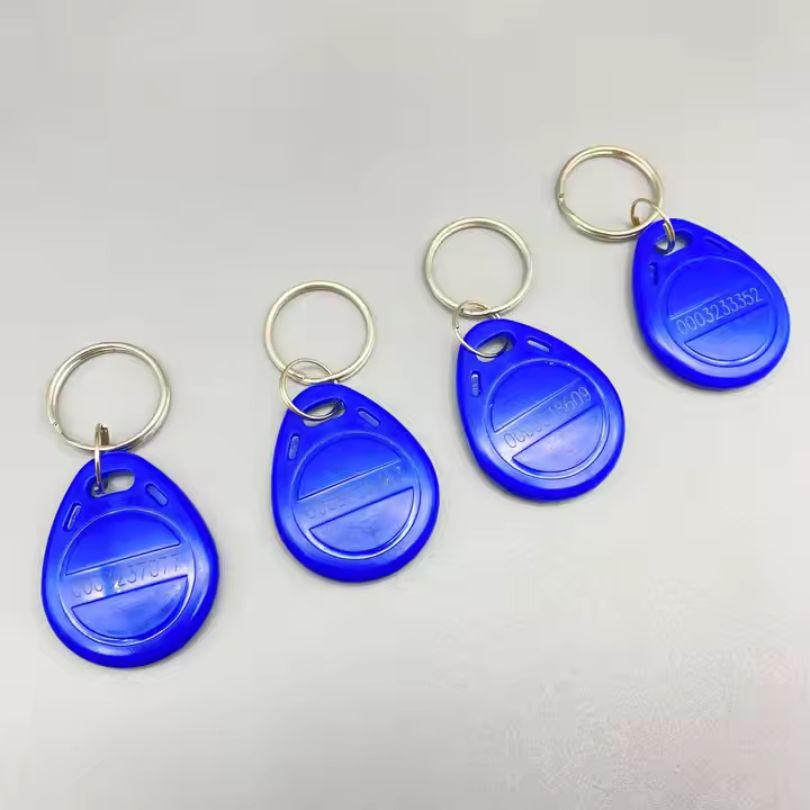
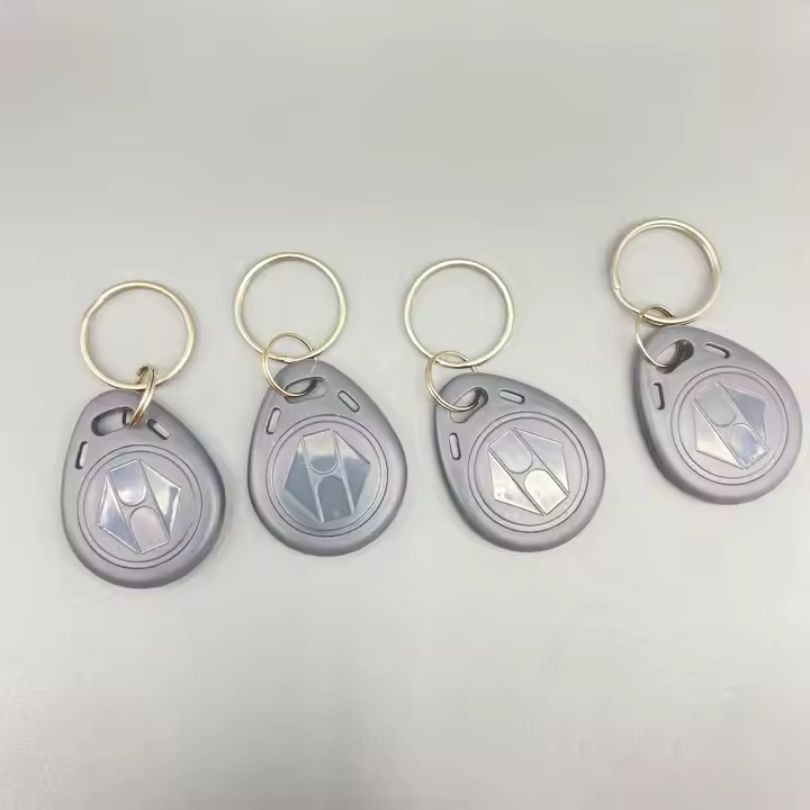
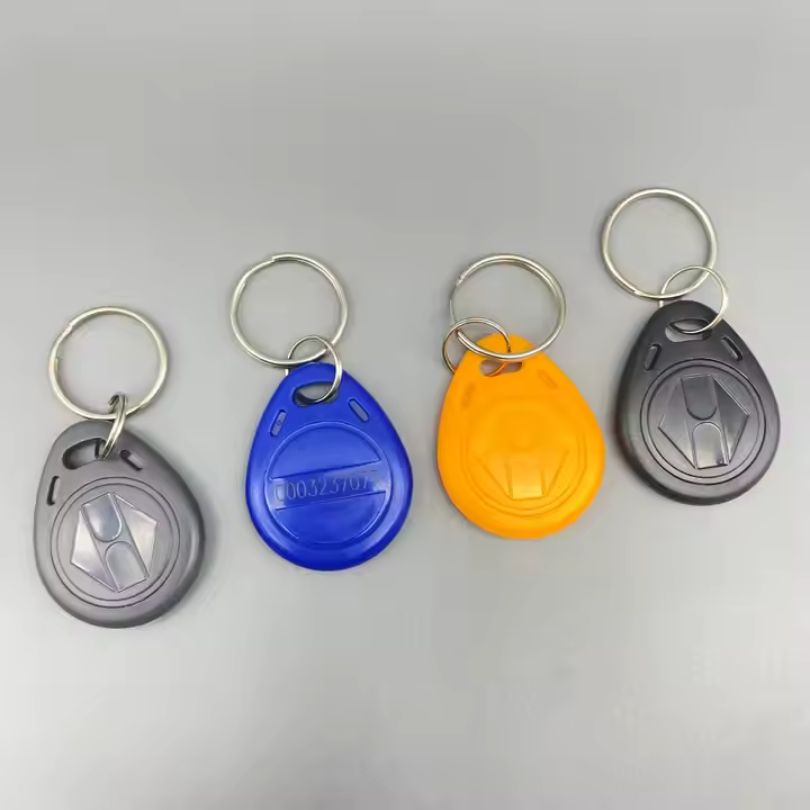
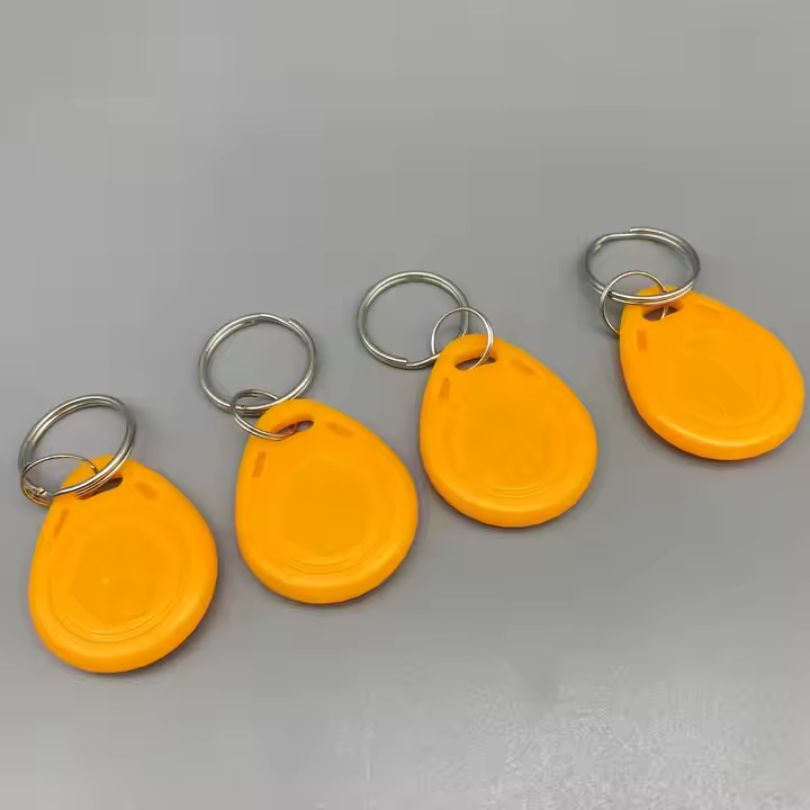
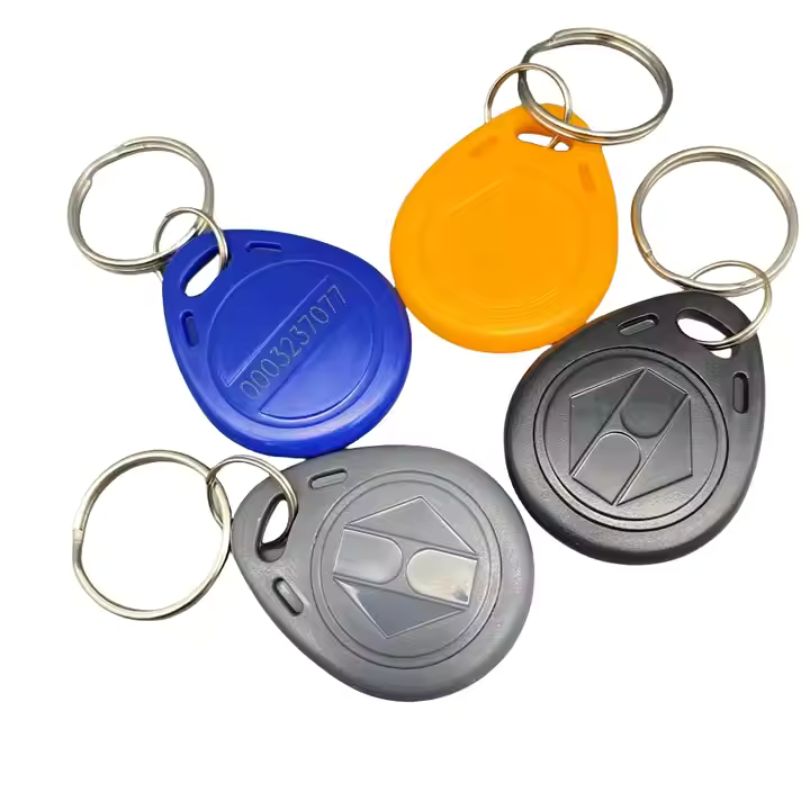

13.56mhz RFID Tag Proximity Rewritable Keychain
Rewritable 13.56MHz RFID Keychains: Ideal for Secure Access & Loyalty Programs
Elevate your access control, event management, or loyalty programs with the 13.56MHz RFID Tag Proximity Rewritable Keychain—a compact, high-frequency solution designed for seamless security and convenience. Combining the reliability of ISO 14443A-compliant RFID technology with a durable keychain design, these tags are rewritable, programmable, and ideal for proximity-based applications. Perfect for offices, gyms, hotels, and public transport systems, the 13.56MHz Keychain offers a portable, tamper-resistant way to manage permissions, track assets, and streamline operations.
Key Features of the 13.56MHz RFID Tag
The 13.56MHz RFID Tag is engineered for flexibility and precision in high-demand environments.
Here’s what makes it exceptional:
- Rewritable Memory: This memory can reprogram data 100,000 times, enabling reuse for multiple users, events, or access levels.
- Proximity Read Range: Operates within a 10 cm (4-inch) range, ensuring secure, contactless authentication without accidental scans.
- Durable Construction: Made from ABS plastic or epoxy resin, resistant to water, dust, and physical wear for indoor/outdoor use.
- High Compatibility: Works with all 13.56MHz RFID readers, including NFC-enabled smartphones, for easy integration.
- Encryption Support: Features basic data encryption to prevent cloning or unauthorized access.
- Custom Branding: For branding and traceability, print logos, QR codes, or serial numbers directly onto the RFID Keychain.
These 13.56MHz RFID Keychain tags are ISO 14443A-certified, ensuring global interoperability and compliance with security standards.
Technical Data
| Parameter | Specification |
|---|---|
| Frequency | 13.56MHz (High Frequency, HF) |
| Standards | ISO 14443A, NFC Forum Type 2 |
| Chip Type | NTAG213, NTAG215, MIFARE Classic® |
| Memory Capacity | 144 bytes to 888 bytes (user-writable) |
| Read/Write Range | Up to 10 cm (4 inches) |
| Material | ABS Plastic, Epoxy Resin |
| Dimensions | 30mm x 50mm x 3mm (standard) |
| Operating Temperature | -25°C to +70°C (-13°F to 158°F) |
| Durability | IP54-rated (dust and splash-proof) |
| Rewrite Cycles | 100,000+ |
| Customization Options | Logo, Text, QR Code, Laser Engraving |
Applications of RFID Keychain Tags
RFID Keychain solutions powered by 13.56MHz technology are transforming industries that demand secure, reusable access tools:
- Corporate Security: Replace traditional keys with programmable 13.56MHz RFID Tags for office doors, lockers, and restricted zones.
- Fitness Centers: Issue reusable keychains for member access to gyms, pools, or VIP areas.
- Public Transport: Enable quick fare payments or ticketing via NFC-compatible 13.56MHz Keychain tags.
- Event Management: Create temporary access passes for conferences, festivals, or VIP lounges.
- Healthcare: Track medical equipment or manage staff access to sensitive areas like pharmacies or labs.
By adopting 13.56MHz RFID Tags, businesses reduce costs through reusable solutions while enhancing user convenience.
Frequently Asked Question
The top questions about 13.56mhz RFID Tag.
RFID stands for Radio-Frequency Identification, a technology used for identifying people, animals, or objects using radio-frequency communication. This identification is facilitated by RFID tags, or transponders, each equipped with a unique identification number and, in some cases, additional memory.
Passive RFID tags are particularly cost-effective, priced at around €0.05, and do not require an external power source. This affordability and ease of use make them ideal for a wide array of applications, including logistics, inventory management, supply chain operations, automation, marketing, and many other fields.
An RFID tag is a chip or transponder equipped with an antenna that amplifies radio signals. Typically, an RFID tag resembles a label with a visible circuit. When adhesive, it is known as a “wet inlay,” and when non-adhesive, it is called a “dry inlay.”
Active Tags
Active tags come with an internal battery, which is typically used to boost transmission power and extend the reading distance. A common example of active tags is the Bluetooth Beacon.
Passive Tags
Passive tags lack an internal power source and instead use a capacitor. Once charged, this capacitor generates an electromagnetic field that transmits the information stored in the chip. An RFID reader powers and reads the tag in a fraction of a second. Passive tags are the most common type because they do not require a battery.
For a complete overview, there are also semi-active tags. These tags have a power supply that is not used for radio circuits but rather for additional features such as temperature or motion sensors.
RFID tags are read or detected using specialized fixed or mobile devices known as RFID readers. These readers activate the transponder through induction or electromagnetism, prompting it to transmit the stored information. RFID readers can come with either an integrated or an external antenna. Some models allow multiple antennas to be connected to a single reader, enabling the identification of tags at various locations or providing precise coverage of a specific area.
RFID technology operates at various frequencies, each with unique characteristics and governed by ISO standards. Here are the most common RFID frequency categories:
125/134 kHz – RFID LF (Low Frequencies): Governed by the ISO 18000-2 standard, these low-frequency tags have a reading distance of a few centimeters and a low data transmission speed. They are primarily used for animal identification, vending machines, burglar alarms, and access control.
13.56 MHz – RFID HF (High Frequencies): Governed by the ISO 18000-3 standard, these high-frequency tags have a reading distance of up to 10 centimeters and a low to medium data transmission speed. This frequency is also known as NFC (Near Field Communication) and is increasingly popular because many smartphones can act as readers, enabling various innovative applications.
860-960 MHz – RFID UHF (Ultra High Frequencies): Governed by the ISO 18000-6 standard, UHF tags have a reading distance of several meters, even with passive tags. There are variations between UHF readers using US and European standards, but the RAIN standard ensures compatibility with both. UHF tags are widely used for logistics, inventory management, timekeeping, and access control.
5.8 GHz – RFID SHF (Super High Frequencies): Governed by the ISO 18000-5 standard, this is the highest RFID frequency range. It includes only active tags with internal batteries, allowing detection distances of hundreds of meters. A common example of SHF tags is those used for electronic toll collection (ETC).
Related Products
Customize any types RFID tags from our factory to meet your own requirements.